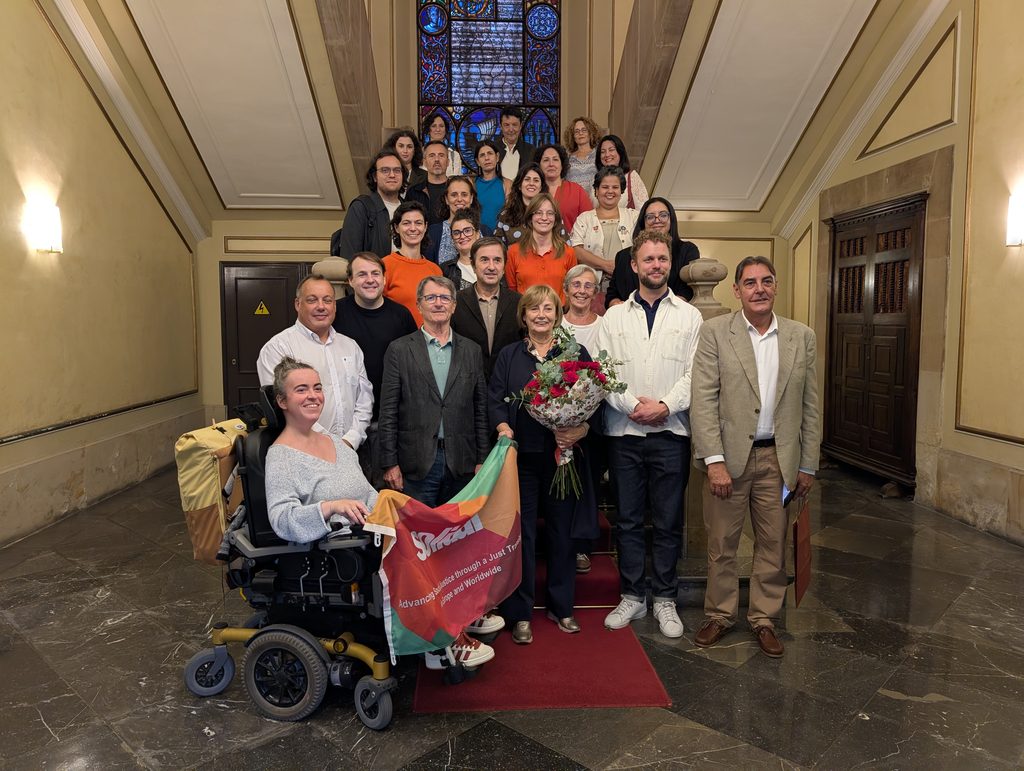

From Reception to Belonging – SOLIDAR members meet in Asturias for an exchange on migration, inclusion and the right to belong
What does it take to move from receiving people who arrive in Europe to ensuring that they can fully belong to the societies they become part of? This was one of the central questions explored during the SOLIDAR Study Visit to Asturias, Spain, from 30 September to 2 October.
Hosted by SOLIDAR’s member Movimiento por la Paz (MPDL) – and more concretely, MPDL Asturias – the three-day visit provided a unique space for exchange on migration and inclusion policies, looking from the local to the regional perspective and comparing the current situation in different Member States. The Study Visit was supported through SOLIDAR’s BRIDGE programme – funded by the European Social Fund Plus (ESF+) – and Erasmus+, with the support of Spanish authorities and institutions, including the Oviedo City Council and University or the Ministry of Inclusion, Social Security and Migration.
Setting the scene: from integration to inclusion
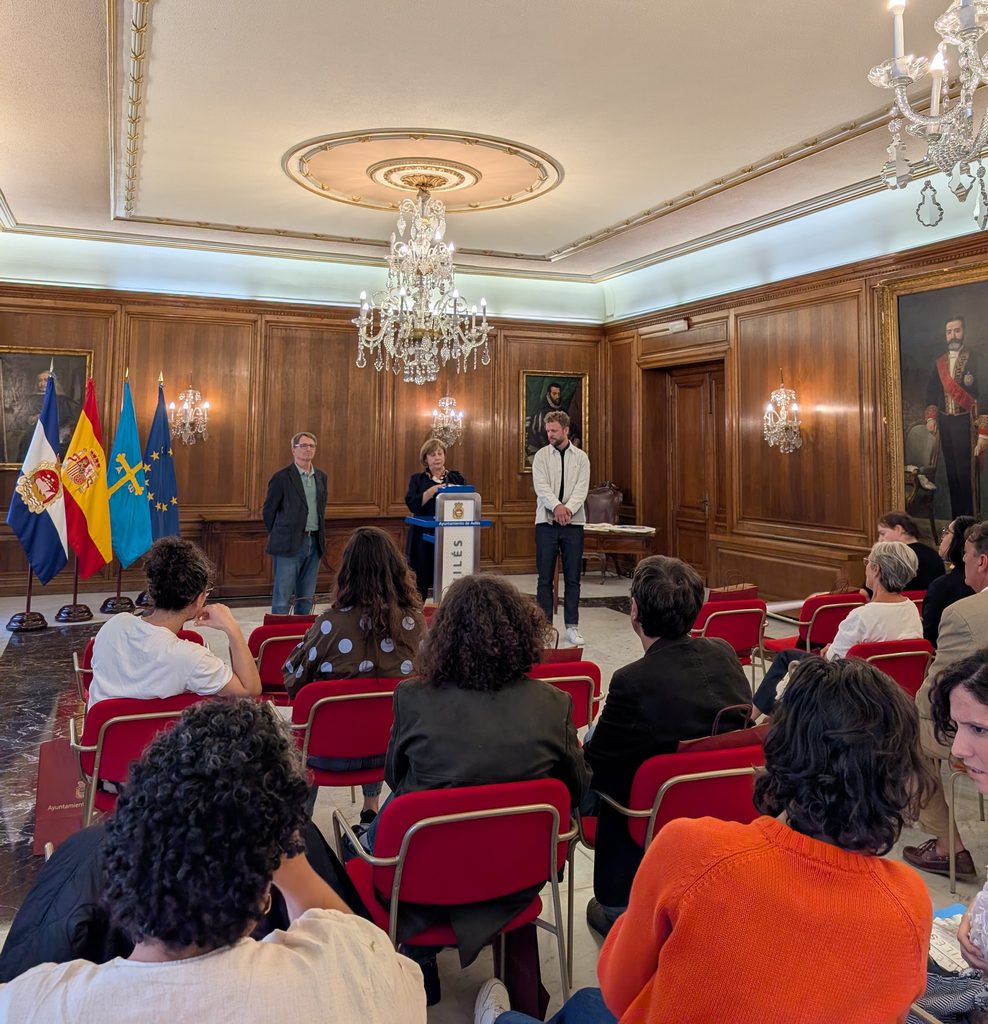
The Study Visit started with an institutional welcoming, where we had the honour of exchanging with Marivi Monteserín, Mayor of Avilés, who highlighted the need for European countries and cities to have a welcoming approach towards migration; not only from a practical perspective considering the ageing population in Europe, but also as an added value of diversity and learning for our societies.
In this sense, Manuel de la Rocha Rubí, president of MPDL, denounced the current practices of some governments that are using migration as a political weapon, particularly from right and far-right forces, ignoring human rights and international values. This session closed with an important message from Mikael Leyi, SOLIDAR Secretary General, who reminded participants that humanity has always migrated and will always do. The challenge, therefore, is to move beyond the reception of migrants and create the conditions for people to feel that they belong, so they can participate fully in the societies where they live.
EU Pact on Migration: a closer look from the local to the regional level
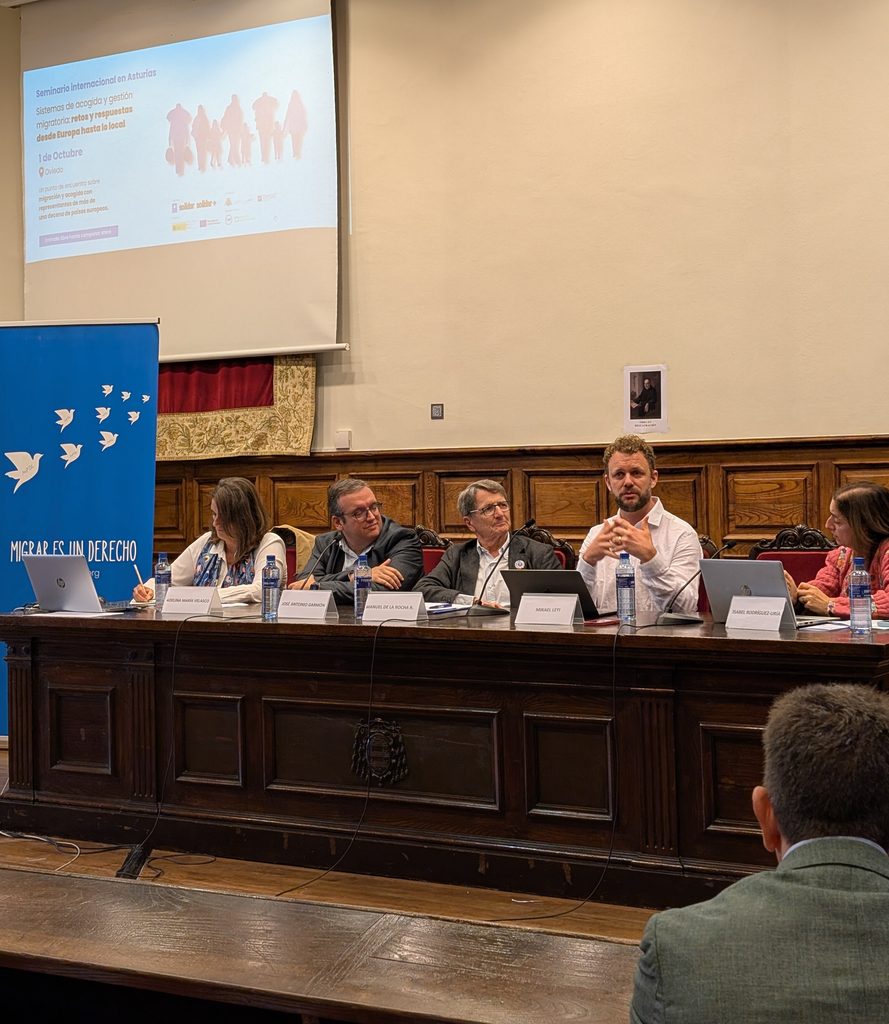
The second day of the Study Visit was focused on the implementation of the EU Pact on Migration, which started on June 12. Isabel Rodríguez-Uría Suárez, International Law Professor at the Oviedo University, presented the Pact as a structural reform built around external border management, common asylum and return procedures, and solidarity between Member States. The opening presentations highlighted key priorities, mainly shared responsibility, fair procedures and protection for vulnerable people. The challenge is turning common European rules into consistent practice across national, regional and local institutions, ensuring that faster decisions preserve individual assessment and meaningful access to legal support.
The discussion was followed by a presentation from Hans Peter Van Den Broek, Sociology Professor at the Oviedo University, who provided a worrying perspective on how second or third generation of migrant people tend to vote to the right and far right, the gentrification of migrant population or the rise of religion among migrant and general population. Based on this, SOLIDAR members from ARCI (Italy), MPDL, Diásporas (Portugal) and Initiative for Development and Cooperation (IDC, Serbia) agreed that the EU Pact’s success will depend on whether common rules deliver real opportunities for inclusion.
The comparison between Member States proves that preparations for border and asylum procedures outpace investment in housing, education, employment and essential services. In Spain, the €500 million funding allocation for the first year of the Integration and Citizenship Plan shows that challenges persist: uneven local access, unclear funding and limited civil society influence. IDC’s experience in Serbia echoes these practical barriers. Closing the gap requires sustained funding, stronger coordination and meaningful civil society participation, with progress measured through people’s access to rights and community life.
The day finalised with the positive note of the screening of the documentary “Al Sur de Ninguna Parte”, showing several stories from migrant people supported by MPDL. The documentary portraited their voices, telling us the difficulties of their travels but also how they achieved a real inclusion in Spanish society. The documentary is available in Amazon Prime from Spain and Portugal.
Access to developing digital competences as key for building a long-term inclusion
The final day focused on the role of learning opportunities as pre-requisites for long-term inclusion, with a focus on digital competences. The workshop in Oviedo explored how digital inclusion goes beyond access to technological infrastructure. It also requires confidence, skills and collective awareness. Local support can help people navigate online services, find employment and participate in community life.
The discussion also connected digital competency with the changing world of work. The interventions by representatives of the Valnàlon centre, UGT Asturias and CCOO Asturias highlighted that more than half of EU employees report algorithmic management practices, and thus how trainings to develop digital competences must include knowledge to recognise workplace monitoring and understand automated decisions. This requires cooperation between educators, public authorities, civil society and trade unions to ensure that digital transformation contributes to inclusion rather than creating new forms of exclusion.
From reception to belonging
Across the three days of discussions, presentations and exchanges, one message came through clearly: inclusion must be the ultimate goal, yet current policies remain primarily focused on reception and border control. It requires access to rights, housing, lifelong learning, and employment, but also the opportunity to participate in community life, develop meaningful relationships and feel that one belongs. Moving from reception to belonging therefore requires more than effective migration management. It requires welcoming societies and sustained investment in the social conditions that allow everyone to participate, contribute and thrive. For SOLIDAR members, the Study Visit was also an opportunity to compare realities across countries, share experiences and strengthen cooperation between organisations working directly with migrant communities.