
Civil society meets in Brussels to strengthen funding resilience, education & civic participation
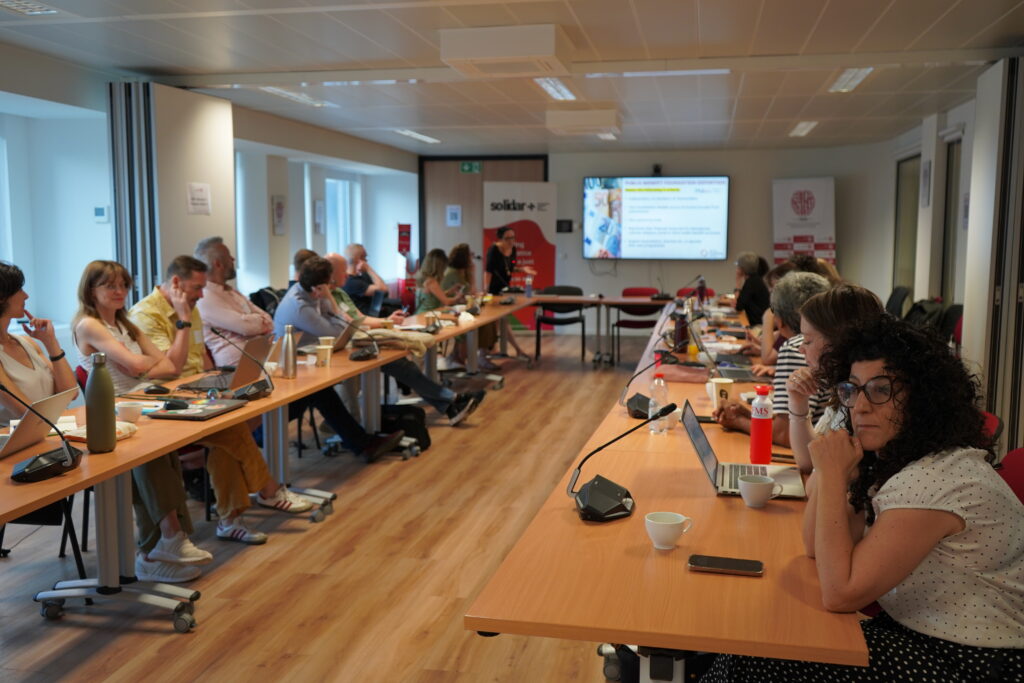
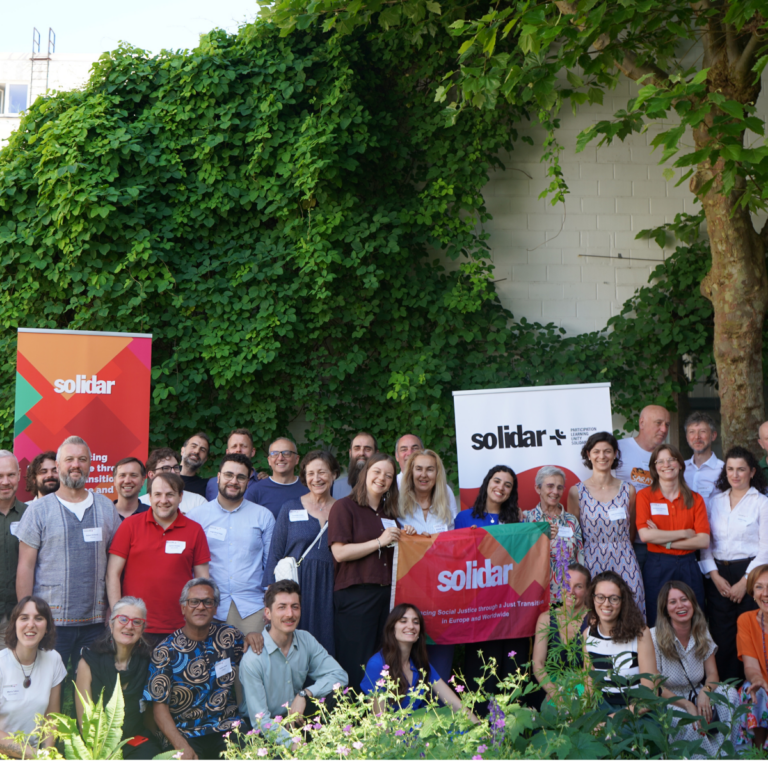
On 26–27 May 2026, SOLIDAR and SOLIDAR+ members met in Brussels for two events connecting work on civil society funding, education, and citizenship, and their shared role in sustaining democratic participation.

Training Academy on Diversifying Funding for Civil Society Organisations
The programme opened on 26 May with a Training Academy on Diversifying Funding for Civil Society Organisations, facilitated by Katarina Bartovičová, Senior Fundraising Manager at EDRi (European Digital Rights).
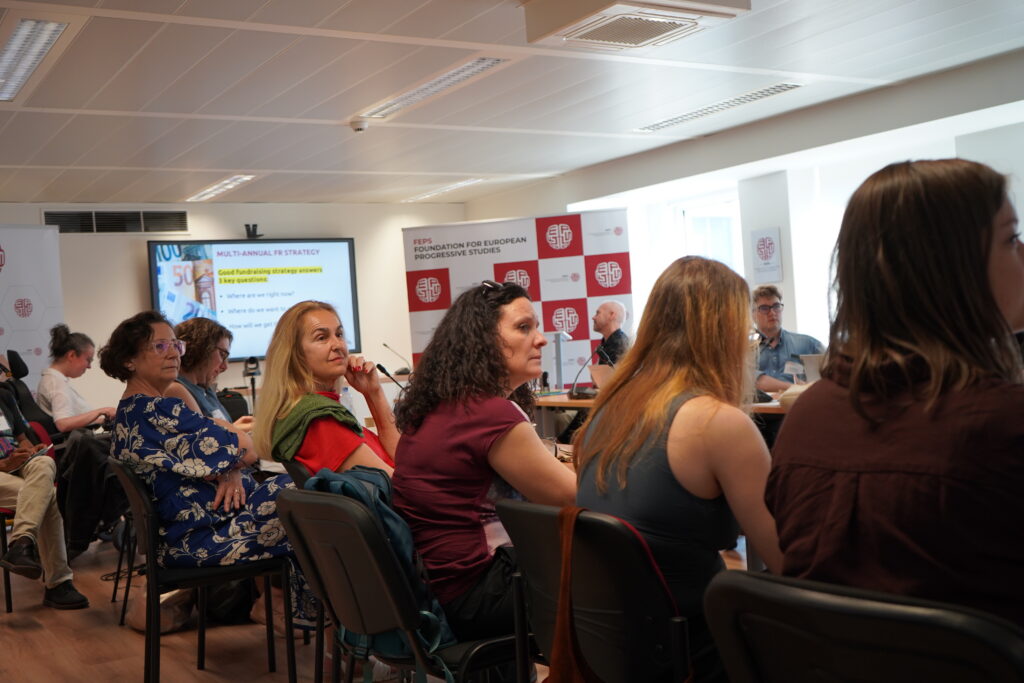
The session focused on the increasingly constrained funding landscape for civil society across Europe and beyond, marked by declining public and philanthropic resources, rising competition, and growing political pressures. Members shared experiences from their national contexts, highlighting the direct impact of funding cuts on their work as well as the strategies they are developing to adapt, including early diversification efforts, engagement with social economy alternatives, and strengthened collaboration within the sector.
The training explored strategic responses to these developments, including long-term fundraising planning, income diversification across donors, sectors, and geographies, and the balance between restricted and unrestricted funding. Particular attention was given to strengthening internal fundraising capacity and ensuring organisations are equipped to sustain their work over time, while also reflecting on the risks of over-diversification when resources are limited.
Based on the training, a toolkit will be developed to support organisations in their fundraising efforts with practical tools and strategies.
Citizenship & Popular Education Members Forum
The following day, SOLIDAR and SOLIDAR+ members met for the Citizenship & Popular Education Members Forum, chaired by Simon Parkinson (WEA). The exchange combined updates on EU policy developments and joint advocacy priorities with reflections on members’ own organisational work.
Members discussed key developments concerning the next Multiannual Financial Framework (MFF). SOLIDAR+ presented updates on its ongoing advocacy, including calls for a fivefold increase in the Erasmus+ budget and for at least 20% of the overall EU budget to be allocated to education and training. Advocacy is also focusing on safeguarding funding for the Development Education and Awareness Raising (DEAR) programme, as well as on strengthening references to Global Citizenship Education (GCE) in the European Parliament’s proposed amendments to the Global Europe Instrument.
Updates were also shared on ongoing collective initiatives, including the Civil Society Alliance for Global Citizenship Education, the establishment of a SOLIDAR Task Force on Civic Space, and the development of a SOLIDAR+ Learning Management System. Members were also briefed on the upcoming SOLIDAR+ annual publication, which will explore the role of non-formal and informal learning in strengthening citizenship and digital competences.
The discussion then turned to members’ national experiences and ongoing work, highlighting a diversity of initiatives across education, civic engagement, and social inclusion. Members shared updates on community-based research and training for under-supported school staff, as well as participatory work with women migrants. Other experiences included human rights and citizenship education in schools and universities, intercultural and anti-violence education, and innovative approaches such as artivism in public spaces. Members also presented work on Global Citizenship Education and democratic memory, including intergenerational dialogue, and engagement with local policymakers through trainings and thematic focus groups. Further updates covered migrant narratives through oral history, validation of non-formal learning, and well-being programmes. Furthermore, members exchanged on conscientious objection in the context of the recently reintroduced mandatory military service in Croatia and related debates in Serbia. Together, these exchanges reflected the breadth of members’ work and the diverse ways in which organisations are responding to social and democratic challenges across different contexts.
Across both days, the exchanges reinforced the importance of sustained cooperation among civil society actors to strengthen organisational resilience, respond to shrinking civic space, and support education and citizenship across Europe and beyond.