

Social Europe Conference 2025 – affordable housing is both a matter of social justice and democracy
SOLIDAR’s 2025 Social Europe Conference titled “Housing for all: delivering social rights to strengthen our democracy” explored the connection between the housing crisis and the erosion of trust in democratic institutions, highlighting the need to provide effective solutions to the current emergency to ensure that the health of our democracy is restored. With the European Affordable Housing Plan to be published by the European Commission on 16th December the Conference was a timely occasion to deepen the key features this instrument should have to respond to people’s needs.
The event was held in the European Parliament on 2nd December and was hosted by the S&D Group. In the same event, SOLIDAR launched its latest edition of the Social Rights Monitor (SRM), assessing the state of social rights – including access to housing and democratic participation – in Europe.
Mikael Leyi, SOLIDAR Secretary General, opened the event and welcomed the participants. He stressed that the housing crisis is the consequence of years of public underinvestment and speculation in the housing market. He noticed that housing is an issue of social justice, but also a problem for democracy. In fact, the lack of access to affordable housing solutions coupled with the lack of political support to affordable housing strategies, has fueled anti-establishment disaffection over the past years.
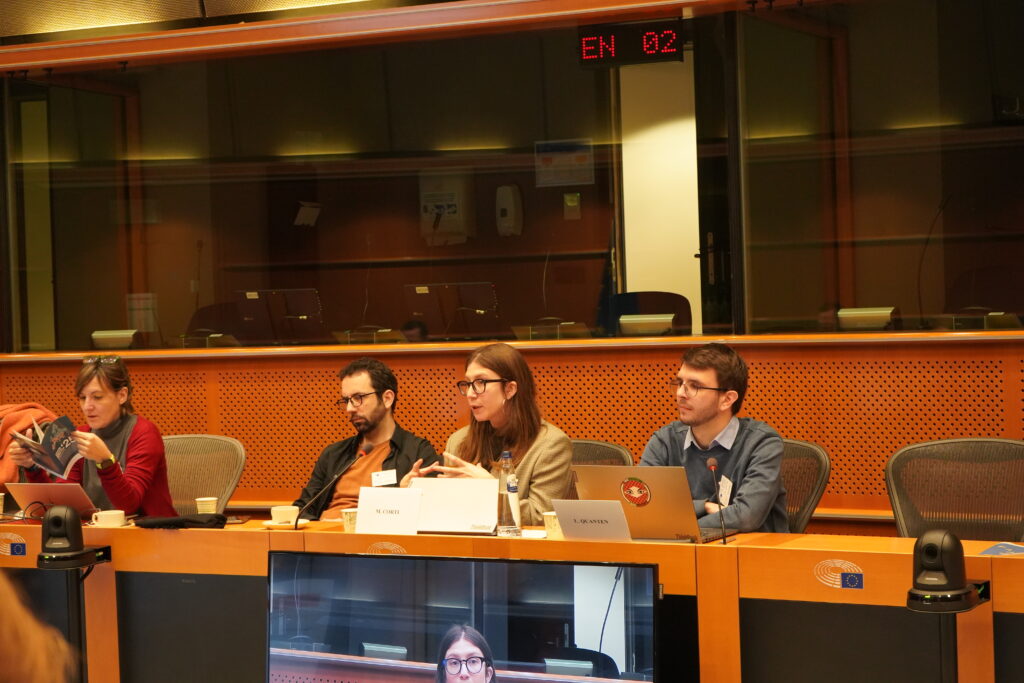
Martina Corti, Social Affairs Policy Officer at SOLIDAR, and Lars Quanten, Social Affairs Fellow at SOLIDAR, presented the main findings of the SRM 2025. The Monitor shows that the cost-of-living crisis, particularly exacerbated by the housing crisis, is one of the main challenges in Europe, increasing the risk of poverty and social exclusion, particularly for the most marginalised groups. The lack of adequate minimum wages in several of the 13 European countries analysed is another problematic fact for the implementation of the EPSR. Civic space and civil dialogue are also under strain due to anti-democratic trends rising, which further jeopardises the state of democracy in Europe. Policy recommendations stemming from the findings were also presented and included:
- Tackle the financialisation of the housing market by curbing speculative investment and limiting wealth accumulation through housing and by regulating the housing market, including through rent caps. Only allow private investment in the market when it responds to ambitious social and environmental standards.
- Expand the affordable housing stock, namely the social housing stock, through renovations, rent control measures and adequate investment in social and affordable housing. Provide substantial support to social and solidarity economy actors through funding and privileged access to public procurement, in the light of their essential role in ensuring access to affordable housing.
The full SRM is available here and the main findings and policy recommendations are summarised here.
A panel discussion on how the upcoming European Affordable Housing Plan can protect the right to housing and reinforce democratic values and moderated by Carlos Roldán Mejías, Social Policy Coordinator at SOLIDAR, followed. Matthew Baldwin, head of the European Commission’s Housing Task Force, clarified the Plan will be ambitious but only a first step toward an EU-wide response. He stressed the need for private investment tied to clear responsibility criteria and noted that while subsidiarity matters, the EU still has an important role in housing policy.
Barbara Steenbergen, Head of the EU Liaison Office at IUT, highlighted the urgency of the crisis, noting that rents have risen by 40% across the EU. She called for direct EU-to-local financing, profit caps to prevent financialisation, and exempting housing investment from debt calculations.
Elena Alexandra Calistru of the EESC described housing as a pillar of the European Social Model and essential for competitiveness. She warned that lack of access fuels anti-democratic forces, making housing a form of “democratic infrastructure.” She emphasised the need for strong local involvement and the use of Cohesion Policies.
Silke Goubin, researcher at HIVA–KU Leuven, shared findings showing that fewer than one-third of people are satisfied with housing access, and most see housing as a public responsibility, linking affordability to trust in institutions. She argued that treating housing as a right, not an asset, is key to countering the far right. She also stressed that increasing supply alone is insufficient without considering demographic trends, intergenerational justice, and the needs of marginalised groups.
SOLIDAR looks forward to the launch of the European Affordable Housing Plan and hopes to see many of the elements discussed in the Conference included, particularly guarantees against further financial speculation from private investors and mechanisms to directly involve local communities and civil society organisations in the solutions to the crisis. As clearly elaborated by the speakers, social justice and democracy are two faces of the same coin.
This Conference was organized in the framework of SOLIDAR’s Organisational Strategy 2021-2025 and the program ”Realising Social Europe for All and With All”, supported by the European Union, through the EaSI strand of the ESF+ programme.