

SOLIDAR+ presents its new policy paper at the European Parliament: Enabling Learning Environments for Citizenship and Digital Competences Development
What does it actually take for people to develop the competences they need to participate democratically in an increasingly digitalised society?
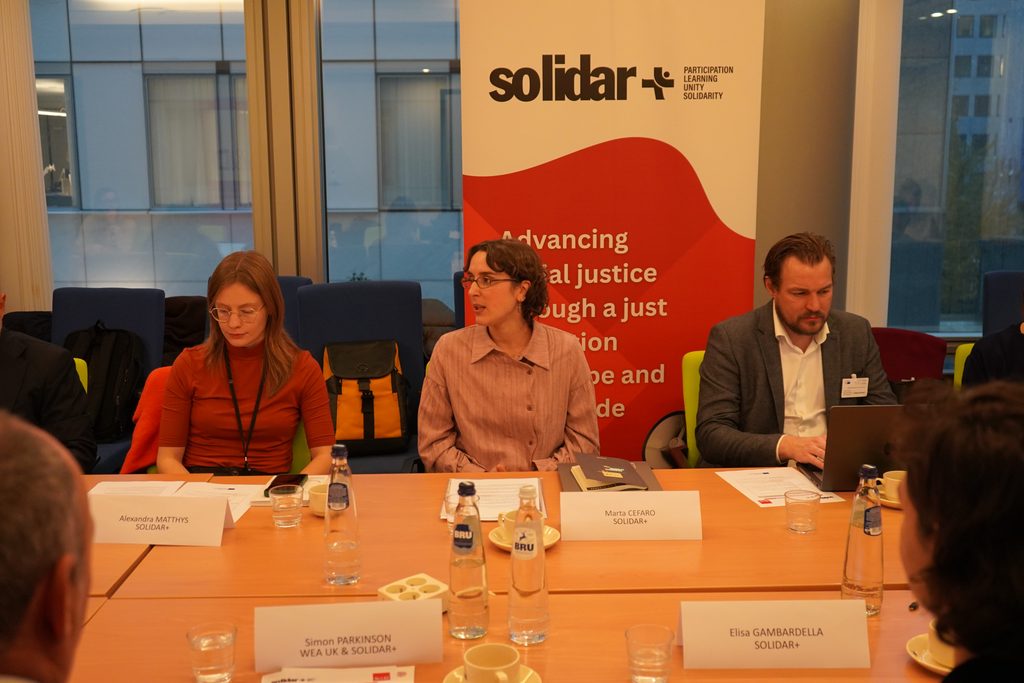
On 17 November, SOLIDAR+ brought together policymakers, civil society organisations and education practitioners at the European Parliament to present its new policy paper, Enabling Learning Environments: The Role of Non-Formal and Informal Learning in Fostering Citizenship and Digital Competences, and discuss how non-formal and informal learning (NFIL) can foster the development of the citizenship and digital competences needed for democratic participation in an increasingly digitalised society.
Creating enabling learning environments: findings and recommendations
Presenting the publication, Marta Cefaro (SOLIDAR+) highlighted that, despite growing EU recognition of citizenship and digital competences, significant inequalities persist in opportunities to develop them.
The research identifies several characteristics of enabling learning environments: connecting learning to people’s lived experiences, fostering dialogue and critical reflection, enabling meaningful participation in decision-making, and providing individualised guidance and supportive relationships that strengthen learners’ confidence and autonomy. The findings also highlight the particular contribution of NFIL, whose proximity to communities and pedagogical flexibility allow providers to respond to diverse learning needs. However, their capacity to sustain these approaches remains constrained by insufficient funding and institutional recognition.
Building on these findings, SOLIDAR+ calls for sustainable investment in NFIL, greater support for inclusive and participatory educational approaches, stronger integration of citizenship and digital competences through digital citizenship education, sustained cooperation between formal and non-formal learning providers, and more accessible recognition and validation of competences acquired through NFIL.
Empowering citizens beyond digital regulation
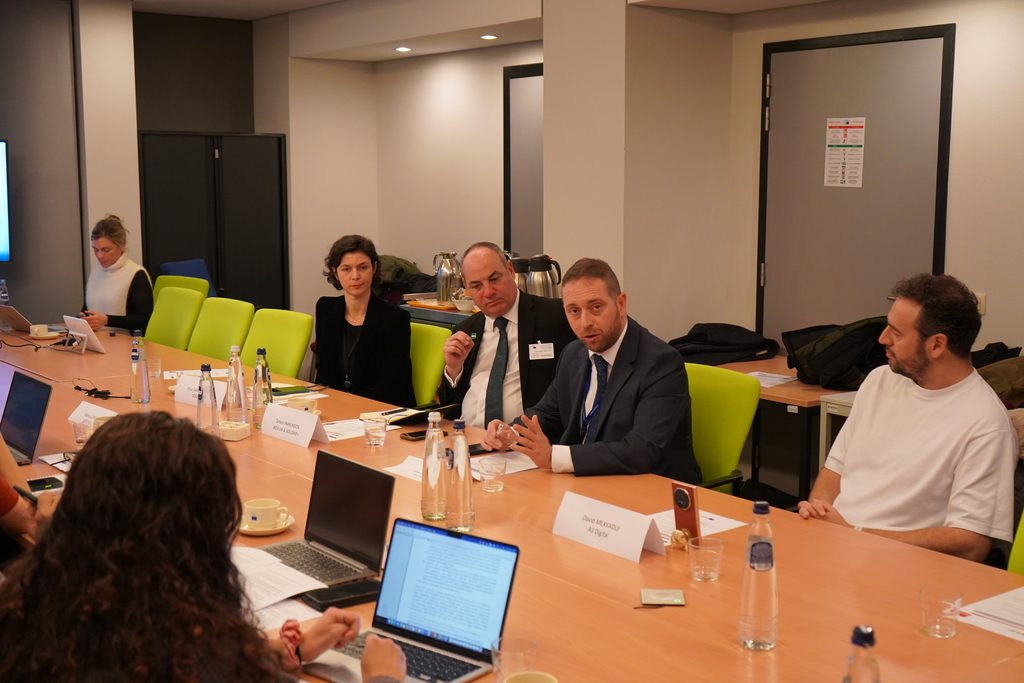
In his intervention, MEP Alex Agius Saliba (S&D Group) stressed that, while the EU is making progress in regulating digital technologies and confronting the power of big tech companies, regulation alone is insufficient. Citizens must also be equipped with the knowledge and competences to navigate digital environments critically and understand their societal implications, with particular attention to people from vulnerable backgrounds. He reaffirmed the S&D Group’s commitment to empowering citizens in this regard and ensuring that technological development remains aligned with European democratic values.
Making learning environments fit for (digital) citizenship education
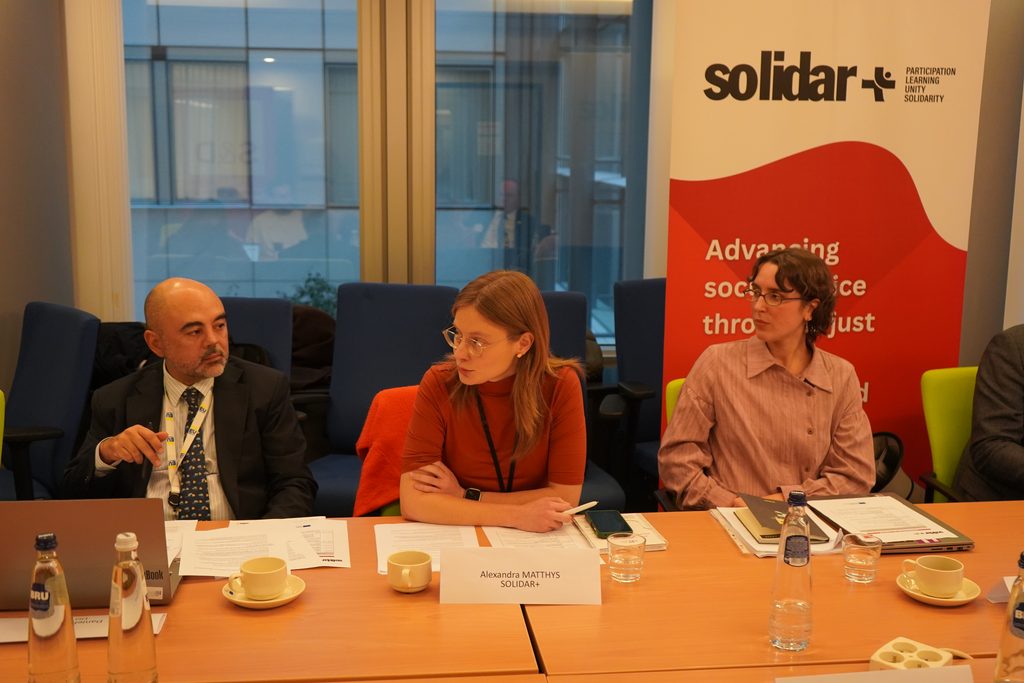
The roundtable, moderated by Alexandra Matthys (SOLIDAR+), explored the implications of the paper’s findings for education practice and EU policy.
Daniele Vidoni (European Commission, DG EAC) presented ongoing work on the European Competence Framework for Citizenship Education and accompanying guidelines. He emphasised the complementarity between formal and non-formal learning, arguing that citizenship competences require opportunities to practise democratic participation, while recognising the challenges of assessing learning beyond formal education.
David Mekkaoui (All Digital) argued that merely teaching people to operate technologies risks creating users rather than empowered digital citizens. He stressed the importance of combining practical digital skills with critical thinking, strengthening digital confidence as technologies evolve, and increasing investment in NFIL to support lifelong and lifewide learning.
Riccardo Gulletta (North-South Centre of the Council of Europe) highlighted the contribution of Global Citizenship Education in connecting local and global challenges. He emphasised that democratic competences must be experienced and practised, through participatory learning and opportunities for action, rather than acquired solely through theoretical instruction.
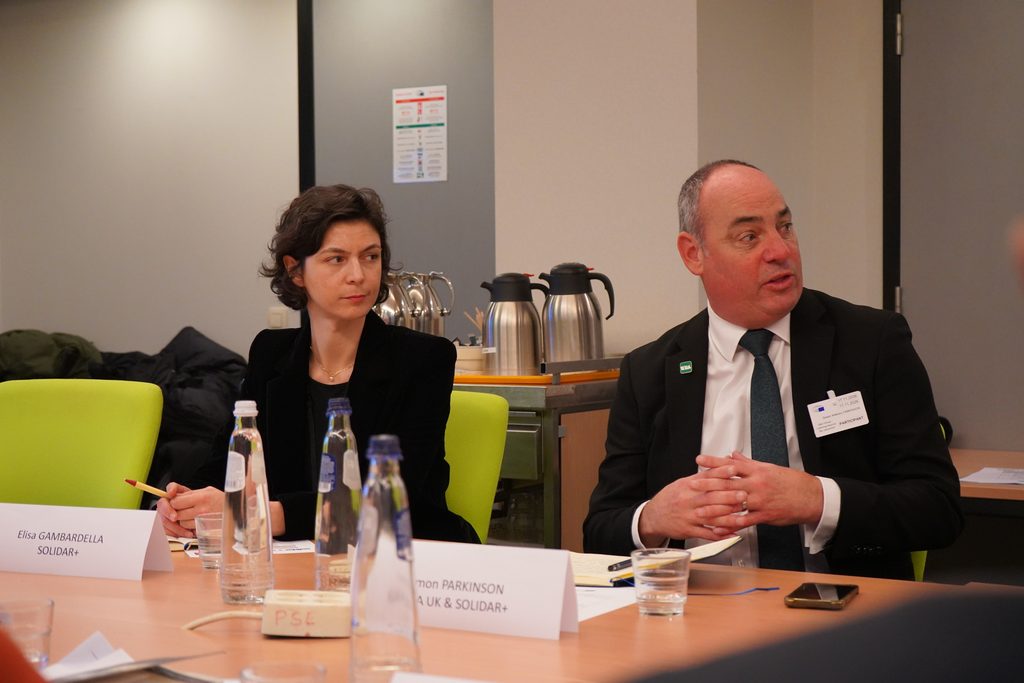
Simon Parkinson (WEA UK and SOLIDAR+) stressed the importance of community-based learning in reaching adults excluded from formal education. He also challenged funding models focused narrowly on employment outcomes, arguing that lifelong learning generates wider social benefits, including stronger communities, reduced isolation and greater opportunities to overcome intergenerational educational inequalities.
Reaching all learners, not only those already engaged
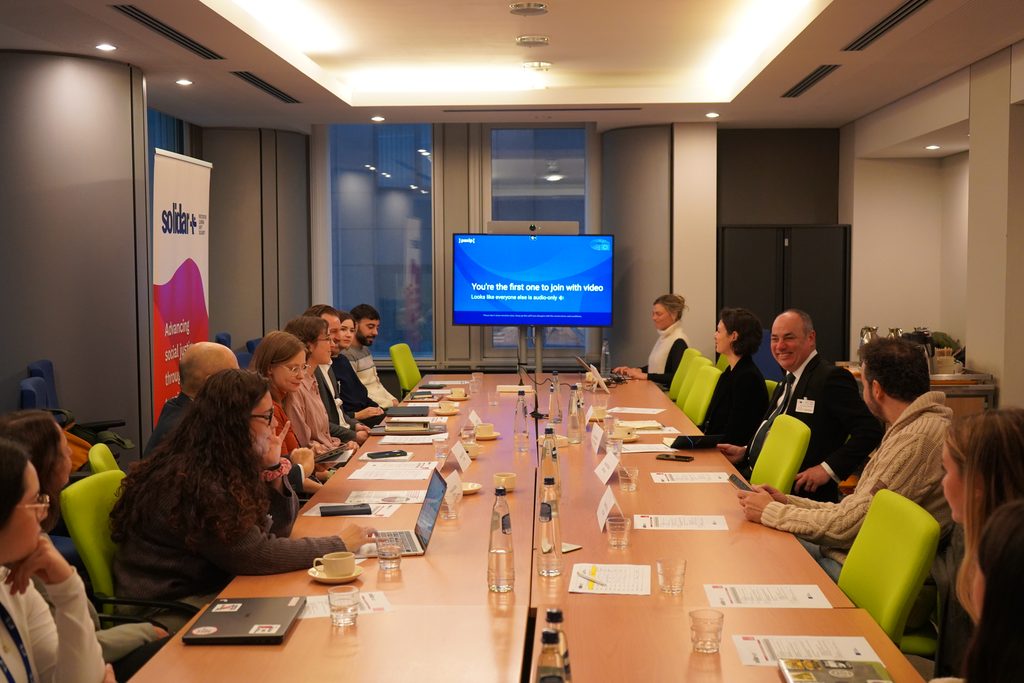
The Q&A focused on how learning providers can reach wider populations, including people who do not currently seek educational opportunities and those living in rural areas. Discussions highlighted the importance of communicating learning’s relevance to different audiences, building partnerships, addressing digital exclusion and involving educators and role models who reflect learners’ experiences.
The conference reaffirmed a central message of SOLIDAR+’s paper: enabling everyone to develop citizenship and digital competences requires not only inclusive pedagogical approaches, but also sustained public investment, institutional support and recognition of learning across different settings.