

EMPASY Final Conference: Supporting Youth Mental Health through Participation and Emotional Empowerment
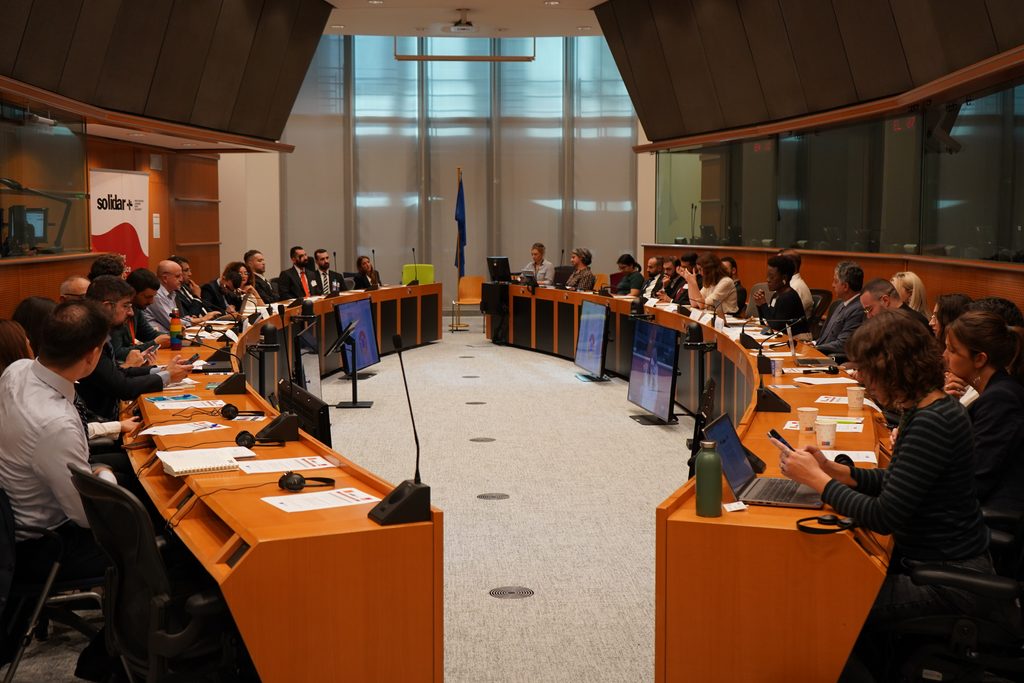
How can emotional literacy and meaningful participation contribute to young people’s mental health? The EMPASY final conference brought together civil society organisations, practitioners and policymakers at the European Parliament to explore this question and discuss how its findings can inform future practice and policy.
Held on 14 October 2026 at the European Parliament in Brussels, the conference Supporting Youth Mental Health Through Participation and Emotional Empowerment marked the culmination of the EMPASY project, bringing together experiences from Lebanon, Morocco and Jordan alongside European perspectives on youth participation, emotional literacy and mental health.
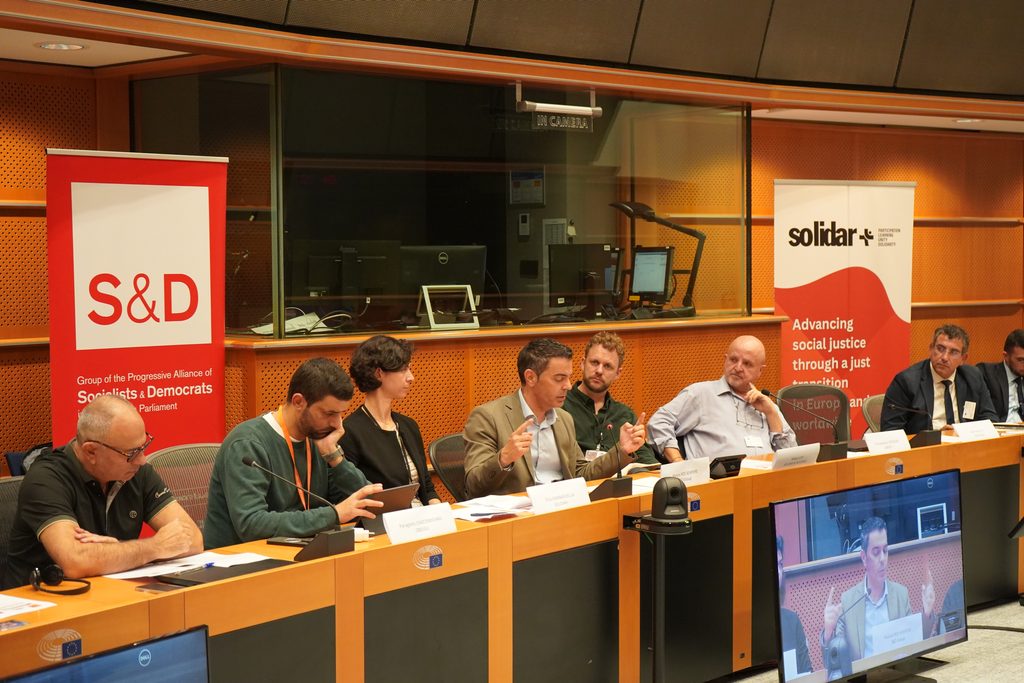
Opening the conference, Mikael Leyi, Secretary General of SOLIDAR and SOLIDAR+, highlighted the importance of addressing young people’s emotional well-being in contexts where basic needs remain unmet and conflicts deeply affect communities. While considerable attention and resources are devoted to upskilling and reskilling for labour market needs, emotional well-being receives comparatively less attention.
MEP Marcos Ros Sempere (S&D Group) similarly stressed that economic insecurity, technological change, geopolitical tensions and climate change shape how young people build relationships and imagine their futures. He called for a broad understanding of education that prepares young people not only for employment but also for democratic citizenship, and emphasised that investing in young people means investing in our democracies.
Understanding the links between participation, emotional literacy and mental health
Presenting EMPASY’s research, Luca Merotta of Fondazione ISMU explained that meaningful participation and emotional literacy are closely interconnected and both contribute to young people’s mental health. Giving young people opportunities to influence decisions, alongside the emotional tools to navigate their environments, can strengthen their sense of belonging, resilience and civic engagement.
The research conducted across Lebanon, Morocco and Jordan identified four key areas shaping young people’s experiences: relationships with family and peers; attitudes and expectations shaped by uncertainty and social media; skills gaps among young people and youth workers; and structural challenges, including territorial inequalities, mental health stigma and the mismatch between education and labour market needs.
These findings underline that mental health cannot be understood solely at the individual level. The relationships and environments in which young people live, learn and participate also matter, as do the opportunities they have to express themselves and shape their communities.
From evidence to practice: tools for youth workers and organisations
A central outcome of EMPASY was the development of two practical handbooks on participatory approaches and emotional literacy. Available in English, Spanish, Arabic and French, they provide resources for youth workers, youth leaders and other professionals working with young people through non-formal education.
Presented by Giulia Landi of Fondazione ISMU, the Handbook on Participatory Approaches guides organisations through three stages: reflecting on their own positionality, power and privilege; identifying young people’s needs through safe spaces and participatory methods; and involving young people in decision-making and implementation. Its starting point is a fundamental question: how can organisations understand young people’s needs without speaking on their behalf?
Ronke Oluwadare of Insieme per Mano presented the Handbook on Emotional Literacy, based on the Nonviolent Communication model. It explores how emotions relate to whether people’s needs are met and offers practical tools for building connection and understanding, including listening, asking questions, empathy and rapport.
Panagiotis Chatzimichail of OBESSU complemented these approaches by highlighting the importance of creating environments in which learners feel heard, trusted and able to influence decisions. He introduced the concept of brave spaces, which encourage participants to engage openly with difficult views within agreed ground rules. He called for learners to be involved in policy design, greater investment in spaces and methods that enable young people to express themselves, and recognition of youth organisations as essential partners.
Perspectives from the ground
The experiences shared by EMPASY’s partner organisations illustrated how these approaches can be adapted to different contexts and challenges.
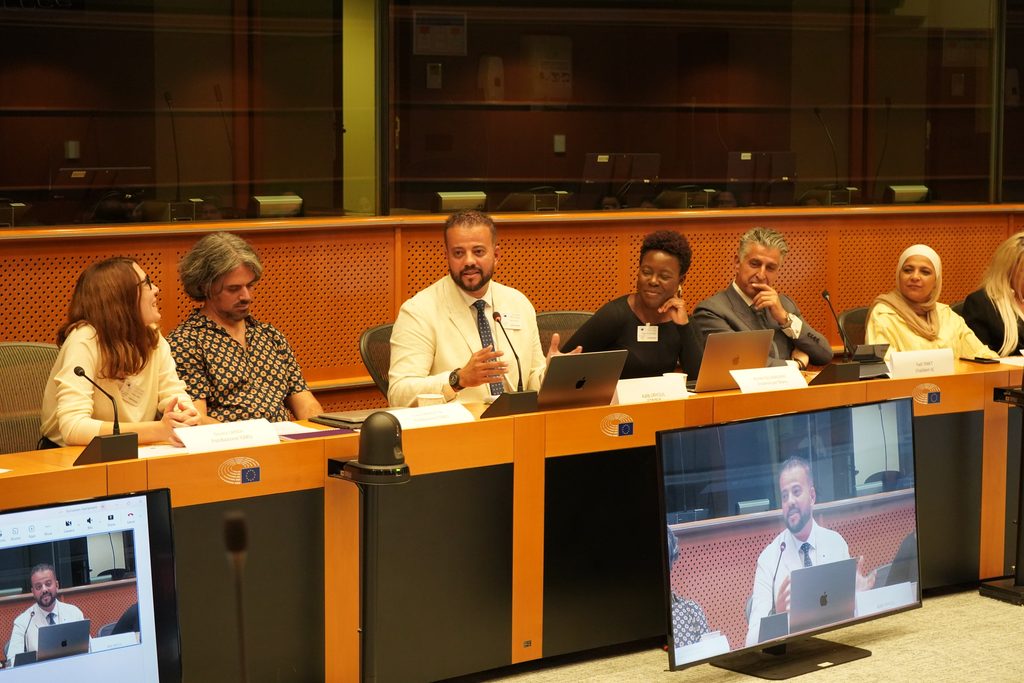
Adib Lrhoul of FOMEJE, from Morocco, stressed that youth participation and emotional well-being cannot be separated: young people are more willing to participate when they feel listened to and included. He described a youth-led mental health campaign that sought to bring the issue into public discussion and challenge stigma. Looking ahead, FOMEJE plans to integrate EMPASY tools into its civic participation and education programmes, strengthen peer-to-peer learning and translate young people’s experiences into policy recommendations.
Issam Atala and Fadi Tabet of Chabibeh SC, from Lebanon, described how the country’s crisis and the war required the organisation to remain flexible and adapt its activities to rapidly changing circumstances. Involving young people in planning and implementation helped the team maintain relevant activities and respond to community needs. The organisation also hosted 43 displaced families on its premises and some of its trainers shared EMPASY practices with them. The organisation plans to integrate the tools into formal and non-formal education and train more professionals, while calling for a shared national vision for young people.
Noor Dfair of Support Youth Leaders, from Jordan, highlighted unemployment, youth engagement and the stigma surrounding mental health as persistent challenges. To encourage young people to participate and connect with others, SYL designed activities around sports and the arts, while also involving public institutions, such as the Ministry of Youth, and local organisations. The organisation plans to embed EMPASY methodologies in other projects and organise workshops with additional organisations to reach more young people.
Policy discussion
The policy discussion, moderated by Elisa Gambardella of SOLIDAR+, explored how youth participation and emotional empowerment could be better integrated into European and EU–Southern Mediterranean policies.
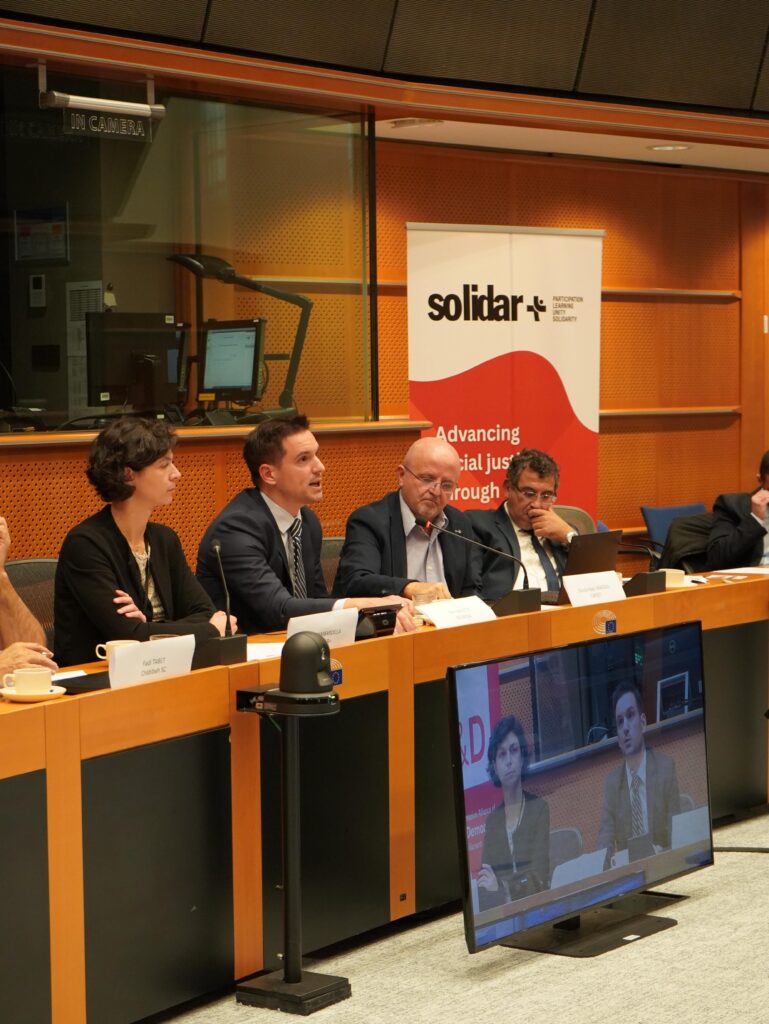
Alen Maletic, Policy Officer at DG MENA, emphasised that youth inclusion extends beyond skills development and employment to encompass democratic participation, trust in institutions, mental health and well-being. He presented the Pact for the Mediterranean as a key framework for cooperation with partners in the region, highlighting initiatives under its People pillar, including the Mediterranean University, the Euro-Med Initiative for Culture and Sport, and the Youth Parliamentary Assembly. He also referred to the Mediterranean Youth in Action programme, implemented by the Anna Lindh Foundation, as an example of regional cooperation supporting young people’s engagement.
Charalambos Vrasidas, Executive Director of CARDET, stressed that mental health and well-being are collective responsibilities, requiring action from communities and public institutions rather than relying on individual competences alone. Meaningful youth participation must go beyond consultation to give young people a genuine role in decision-making. Without institutional mechanisms to sustain this engagement, he warned, projects risk having limited impact beyond their funding period. He also called for evidence-based policymaking and greater attention to the gap between policy commitments and implementation.
The discussion further highlighted barriers to accessing mental health services, particularly their cost, as well as difficulties faced by small grassroots civil society organisations in accessing EU funding. Maletic noted that negotiations on the next Multiannual Financial Framework (MFF) were ongoing, while pointing to sub-granting mechanisms within the programmes presented as a way to channel funding to organisations working on the ground.
Closing remarks
In her closing remarks, Elisa Gambardella reaffirmed SOLIDAR+’s commitment to sharing EMPASY’s resources with partners and policymakers and advocating for a next MFF that reflects the priorities discussed, including socio-emotional development, empowerment and democratic participation.
The conference highlighted a central message: supporting young people’s mental health requires more than individual skills or isolated interventions. It calls for meaningful participation, supportive environments and sustained engagement from civil society and public institutions. Building on EMPASY’s results means ensuring that young people are not only heard, but are also able to shape the decisions and policies that affect their lives.