
ENHANCE Final Conference: Amplifying Learner Voice in Adult Learning
On 12 May 2026, the final conference of the ENHANCE project, funded by the European Commission through the Erasmus+ programme, brought together adult education practitioners, policymakers, researchers, and learners to reflect on how learner voices can be strengthened across adult learning systems in Europe.
The event marked the closing phase of a project coordinated by the European Association for the Education of Adults (EAEA), with partners from across Europe, including SOLIDAR+, AONTAS, SVEB, CINOP, Farnebo Folkhögskola, ABC, Das Kollektiv, Nevelők Háza Egyesület.
Opening the conference, Elisa Gambardella (SOLIDAR+) welcomed participants and introduced the agenda for the day.
ENHANCE in practice
The ENHANCE project was presented by Angeliki Giannakopoulou (EAEA), who underlined its core ambition: placing adult learners at the centre of learning processes and strengthening their capacity to shape education systems.
She explained that the project focused on three main objectives:
- Mapping existing practices that support learner voice through a critical lens, resulting in an interactive matrix;
- Developing practical tools, including a roadmap for organisations, policymakers, and learners, as well as learner-centred booklets;
- Creating spaces for direct expression of learners’ voices through a podcast series featuring learners, practitioners, and policymakers.
The project worked across three interconnected levels: macro level – policymakers and civil society actors; meso level – adult education organisations and networks; micro level: learners, educators, educational content, and methods within the broader adult education community.
Breakout Discussions
A Deep Dive into the ENHANCE Matrix
In a dedicated breakout session facilitated by Alexandra Matthys (SOLIDAR+), participants explored the ENHANCE Matrix and reflected on how learner voice is implemented in their own organisations.
The discussion focused on questions of access and power: who can participate in learning processes, under what conditions, and how learners influence the design and delivery of education. Participants reflected on these issues through their own organisational experiences.
A range of practices was shared: a community-based social accountability initiative in Tunisia; participatory study circles; Voices, a migrant-led oral history project; and Your Voice Counts, an Irish project supporting learners’ engagement in democratic participation.
Key themes included the importance of safe spaces, effective feedback loops, and sustained engagement from both learners and staff to ensure participation is meaningful over time. Participants also reflected on how learner voice depends not only on being heard, but on whether there are clear mechanisms for response and action following participation. The discussion further highlighted the value of existing frameworks such as the Lundy Model as a practical way to connect voice, audience, and action.
Reflections also touched on how tools like the ENHANCE Matrix might be adapted across different contexts.
The Podcast Series
Another breakout discussion focused on the ENHANCE podcast series, which brought together learners, educators, practitioners, and policymakers across 29 multilingual episodes. Facilitated by Larisa Sioneriu (AONTAS), the session explored how podcasts can create spaces for authentic dialogue and amplify experiences that are often absent from formal reports or policy documents.
Participants reflected on themes emerging from the episodes, including empowerment, confidence, connection, and the importance of supportive learning environments. Discussions highlighted how podcasts can capture emotions, lived experiences, and collective feelings in ways that written documents often cannot.
The discussion also explored how podcasts can create spaces for more equal and relational exchanges between learners, educators, and policymakers. Participants reflected on the importance of creating environments where learners feel confident to speak from their own experiences and where participation is understood as an ongoing process rather than a one-off consultation. The session concluded with reflections on podcasts as tools not only for sharing experiences, but also for building connection, visibility, and sustained dialogue within adult education communities.
Good Practice Examples
The conference also showcased practical and policy-oriented good practice examples demonstrating how learner voice can influence change.
Examples included:
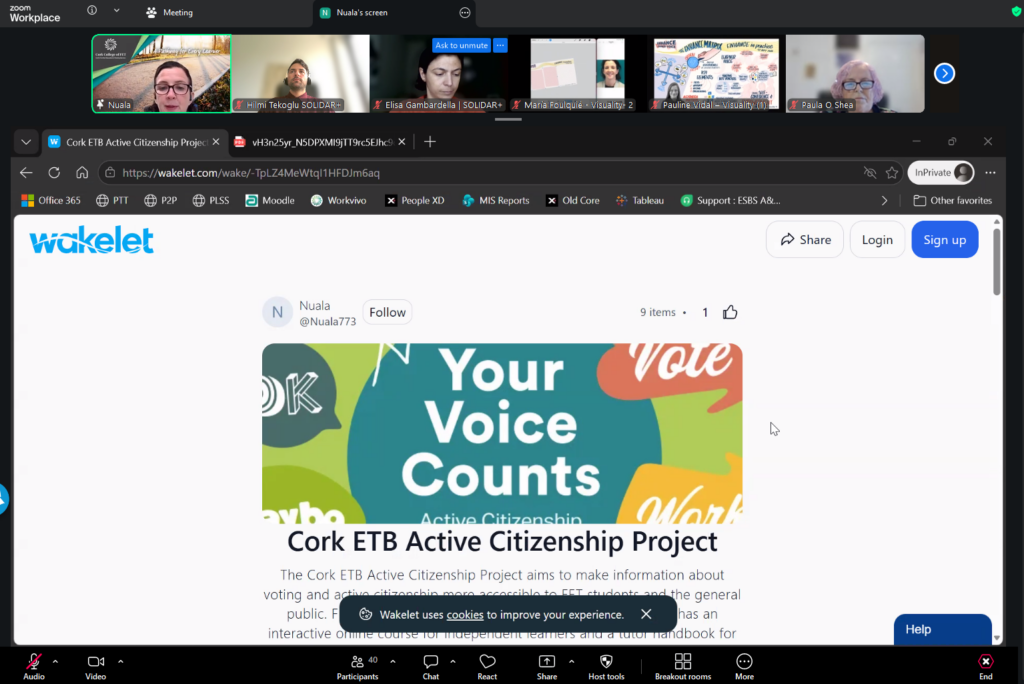
- The Cork ETB Active Citizenship Project, which supports adult learners with low literacy levels to engage in democratic participation, including through multilingual digital learning tools;
- The LEGENDS project, which links digital skills development to personal and local storytelling to reduce digital isolation;
- The GARDEM project, which transforms community gardens into learning spaces for democratic engagement;
The Supporting Mental Health Resilience among Youth in Cyprus project, developed with UNICEF and the Ministry of Health, which informed policy recommendations for the National Mental Health Strategy.
From Voice to Policy
Angeliki Giannakopoulou (EAEA) presented the ENHANCE Roadmap as a guide for processes that aim to create space for and strengthen learners’ voices
Developed through participatory exchanges with learners, educators, practitioners, and policymakers, the roadmap is structured around three central questions: Who speaks? Who listens? Who acts?
Alongside the roadmap, the ENHANCE Booklets were created to address issues such as marginalisation, migrant women’s voices, and community-based learning spaces.
A Roundtable on Learner Participation
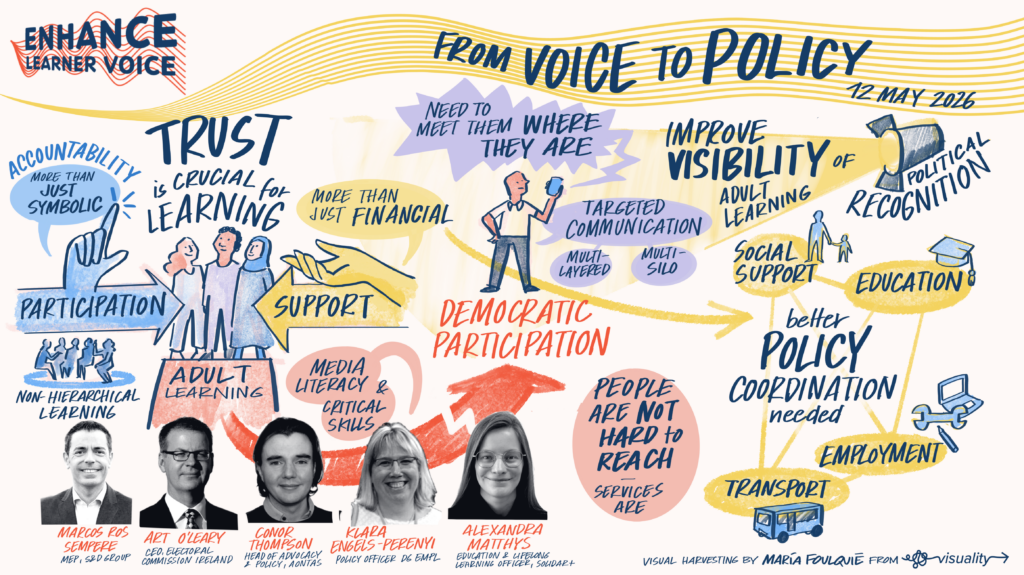
A roundtable discussion brought together MEP Marcos Ros Sempere (S&D Group), Klara Engels-Perenyi (Policy Officer, DG EMPL), Art O’Leary (Chief Executive Officer, Electoral Commission Ireland), and Conor Thompson (Head of Advocacy and Policy, AONTAS).
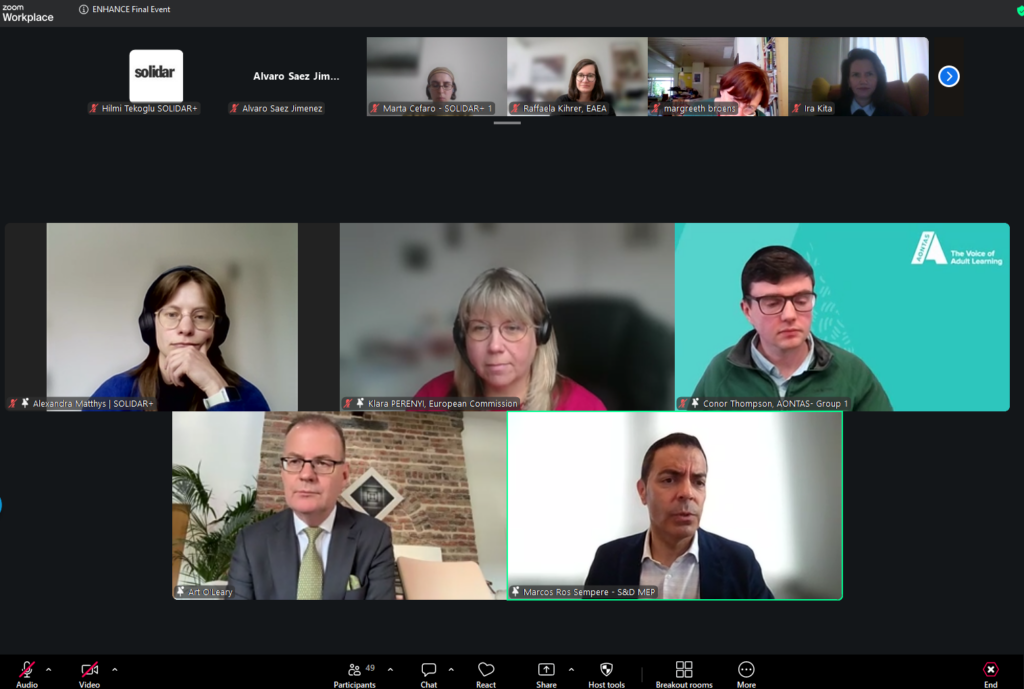
Discussions centred on how learner participation can move beyond symbolic consultation and become structurally embedded in education and democratic decision-making processes.
Speakers highlighted that meaningful participation depends on creating trusted and supportive environments, where learners can engage continuously rather than being consulted only after key decisions have already been made. Several panellists stressed that participation only remains credible when learners can see concrete outcomes and influence resulting from their contributions.
The discussion also underlined the importance of connecting adult learning with broader policy areas such as employment, childcare, transport, digital access, and social inclusion, recognising that barriers to participation often extend beyond education itself.
Questions of communication and visibility were also central. Participants emphasised the need to “meet people where they are”, particularly in digital spaces, and warned that overly technical or bureaucratic language can itself become a barrier to democratic participation.
Finally, speakers stressed that learner voice should not depend solely on temporary projects or isolated initiatives, but requires long-term institutional support, policy commitment, and dedicated participation structures at local, national, and European level.
Closing remarks
In her concluding remarks, Angeliki Giannakopoulou (EAEA) stressed that learning should extend beyond formal education and competitiveness-oriented objectives and be understood as a practice of connection, participation, and collective engagement. She also underlined the importance of remaining vocal and open to listening in contexts marked by rising oppressive ideologies.
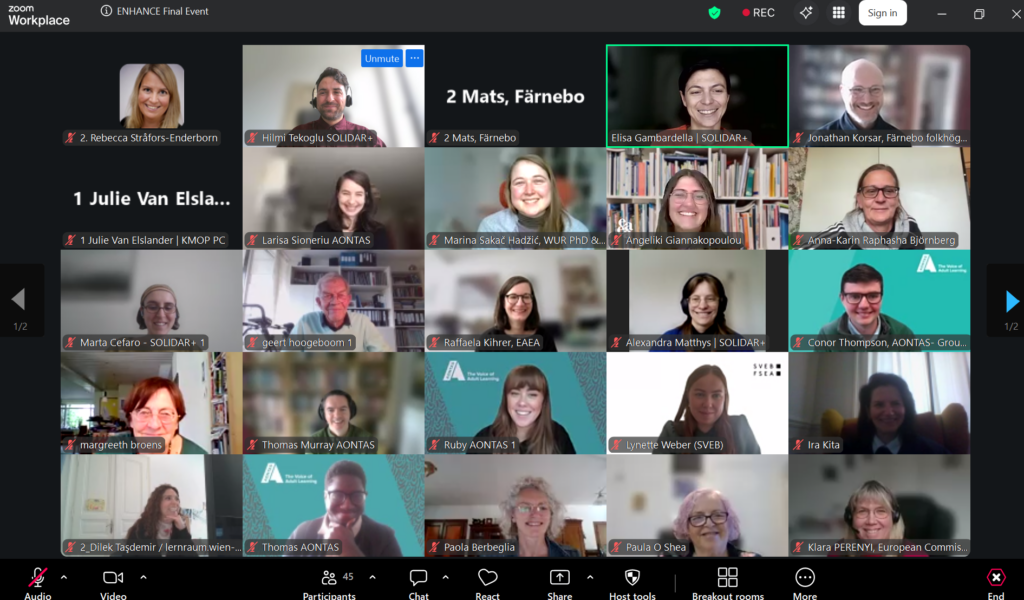
The conference closed with participants thanking one another for their contributions to the ENHANCE project and expressing their intention to remain connected beyond its formal end.
Read the full activity report below to learn more about the presentations, discussions and key takeaways from the event.