

LLLWeek 2025: EU Teachers & Trainers Agenda Stakeholder Policy Discussion
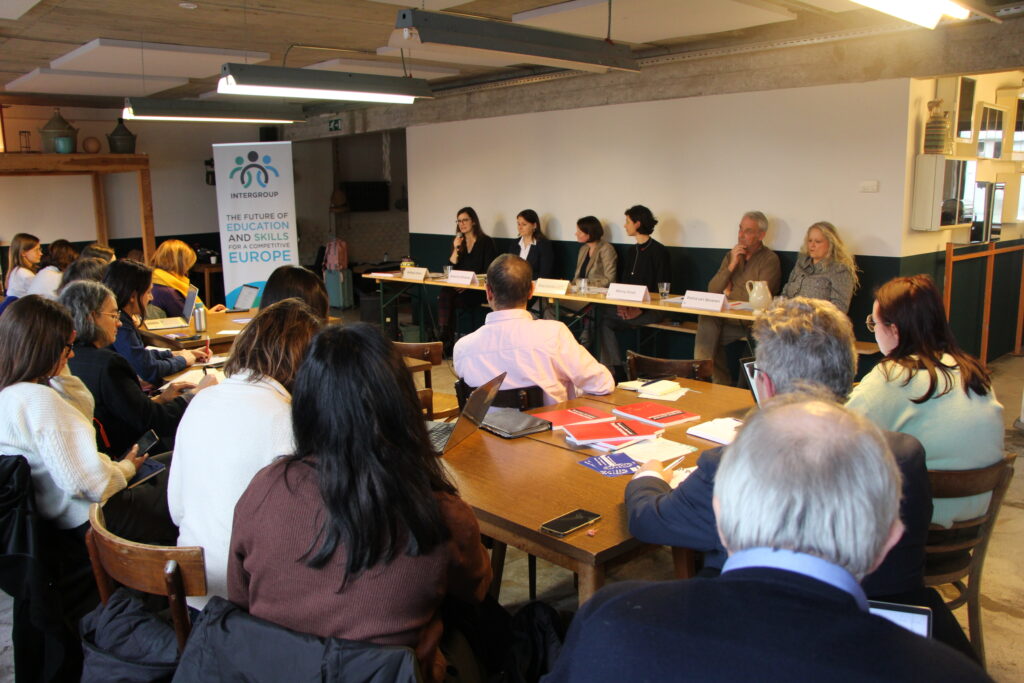
On Friday 12 December SOLIDAR+ and Association for Teacher Education in Europe (ATEE) co-organised a stakeholder policy discussion on the forthcoming EU Teachers and Trainers Agenda within the framework of Lifelong Learning Week 2025. The meeting brought together policymakers, civil society organisations, teachers, and adult education representatives to reflect on current challenges in the teaching and training professions and to consider priorities for the upcoming EU initiative.
Welcoming Remarks
In her welcoming remarks, Elisa Gambardella, Director and Policy Coordinator for Education and Lifelong Learning of SOLIDAR+, welcomed participants and set the context for the discussion. She noted that the forthcoming EU Teachers and Trainers Agenda represents an important opportunity to invest in the education profession, improve working conditions, and recognise the full ecosystem of educators.
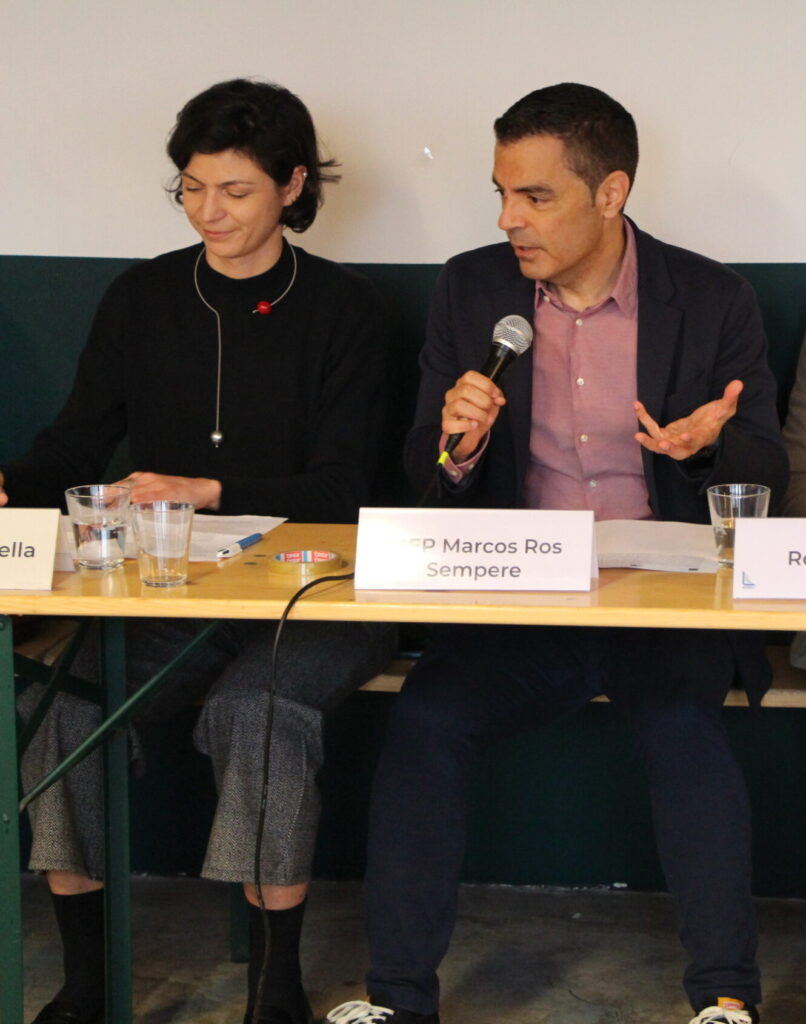
MEP Marcos Ros Sempere, S&D Group, emphasised in his welcoming remarks the importance of lifelong learning as a foundation for a fair, resilient, and forward-looking Europe. Drawing on his experience in the CULT Committee, as well as his background as an architect and professor, he highlighted the ongoing need for reskilling and upskilling, especially in light of the green and digital transitions. In addition, MEP Ros Sempere referred to the recent INI report on a new vision for European University Alliances, and to his role as rapporteur of the upcoming INI report on a new strategy for media literacy and digital learning, noting that lifelong learning is essential for enabling people of all ages to navigate increasingly complex digital environments. He underlined that education is not merely a public service but a public good, shaping society’s ability to grow and thrive. He concluded his remarks by noting that the European Education Area plays a key role in promoting quality, equity, and inclusion for all learners.
Roundtable Discussion: Defining the Path: What Should the Teachers & Trainers Agenda Include?
This introduction was followed by a roundtable discussion on Defining the Path: What Should the Teachers & Trainers Agenda Include?, chaired by Elisa Gambardella, SOLIDAR+, with contributions from Ulrike Storost, Deputy Head of Unit, B2 DG EAC, Ekaterina Efimenko, Policy Coordinator, ETUCE, Raffaela Kihrer, Secretary General EAEA, Pettra van Beveren, member of the ATEE Administrative Council, and Ronny Smet, Vice-president of ATEE.
Ulrike Storost (DG EAC) stressed that although teachers find their work meaningful, most EU Member States face growing teacher shortages, an ageing workforce, and high stress levels, particularly among younger teachers. She highlighted the role of good school leadership, positive school climates, teacher participation in decision-making, and strong professional relationships in improving retention. She warned that negative media narratives risk discouraging future teachers and emphasised the importance of civil society in promoting positive images of the profession. Storost reaffirmed the Commission’s commitment to a strong EU Teachers and Trainers Agenda.
Ekaterina Efimenko (ETUCE) underlined that the upcoming Teachers and Trainers Agenda is a key opportunity to strengthen the attractiveness of teaching, calling for a Council Recommendation to drive national reforms. She emphasised professional autonomy, teacher involvement in decision-making, better working conditions and salaries, and high-quality initial and continuous professional development delivered during working hours. She cautioned against short-term fixes that weaken professional standards and highlighted the importance of governance and social dialogue.
Raffaela Kihrer (EAEA) highlighted the precarious working conditions of adult educators, who often face short-term contracts, multiple roles, and limited access to stable funding and professional development. She stressed the need for stronger digital and pedagogical skills to support disadvantaged learners and warned that an overly skills-focused policy shift risks narrowing the concept of education. Kihrer called for sustainable funding, stronger peer learning, and the full recognition of adult learning and education as an equal pillar of lifelong learning.
Pettra van Beveren (ATEE) focused on the urgent need to renew the teaching profession in light of shortages, burnout, drop-out, and declining basic skills among learners. She stressed the importance of continuous professional development, European knowledge-sharing among educators, and stronger school–university partnerships. She highlighted inclusive and innovative approaches to literacy, numeracy, oracy, and digital skills, as well as greater investment in early childhood education and support for early-career and second-career teachers.
Ronny Smet (ATEE) emphasised the need to raise the status of the teaching profession and better recognise teacher educators. He highlighted teachers’ fears about change and obsolescence and stressed the importance of the human, relational, and value-based dimensions of teaching. Greater societal appreciation and recognition, he argued, are essential to ensuring teaching remains meaningful and attractive.
Read the complete roundtable interventions in the event’s Activity Report.
Concluding Remarks
Agnieszka Szplit, President of ATEE, emphasised that teachers and trainers are the backbone of education systems and highlighted the need for robust frameworks for continuous professional development and cross-sector cooperation. She stressed the importance of approaching the teaching profession from both an evidence-based perspective and acknowledging the passion and personal involvement that educators bring to their work. She underlined that teacher shortages must be addressed in a sustainable way, and that wellbeing, professional trust, and autonomy are fundamental to achieving this. ATEE also called for systematic training in digital skills and other key areas, while stressing that stable contracts and a manageable workload are essential to attract and retain teachers.
Agnieszka summarised the panel discussion by highlighting the need to build a lifelong learning ecosystem that benefits all learners and educators. She underlined that the message from today is both clear and urgent. European educators are partners, innovators, and the foundation of a vibrant, inclusive, and high-quality education system. Investing in them means investing in our shared future: more inclusive societies, stronger democracies, sustainable economies, and empowered citizens. She stressed that supporting educators in all their diversity – teachers, teacher educators, adult educators, and non-formal educators – is not optional; it is essential. Only by combining investment, recognition, collaboration, and trust can we build a lifelong learning ecosystem that benefits all learners and strengthens Europe as a whole. She concluded by thanking everyone for their engagement and contributions.