
Social Rights Ambassador Workshop 2026 – SOLIDAR delegation in Porto to revive the spirit of Social Europe
In a period in which competitiveness, defence and strategic autonomy are the top of the EU agenda, FEPS, FES and Res Publica – in collaboration with SOLIDAR, Johannes Mihkelson Center and Proforum – organised a high-level event in Porto on 19 June, bringing together decision-makers, academia, civil society organisations and trade unions to discuss ways to relaunch the Porto spirit. The event was titled “Social Europe is our target”.
Five years after the Porto Summit and the commitment member states and the EU took to advance the EPSR and its headline targets, key progressive actors met to exchange on ways to ensure that Social Europe regains momentum and strength in a challenging geopolitical context. Executive-Vice President Roxana Minzatu also contributed to the discussions.
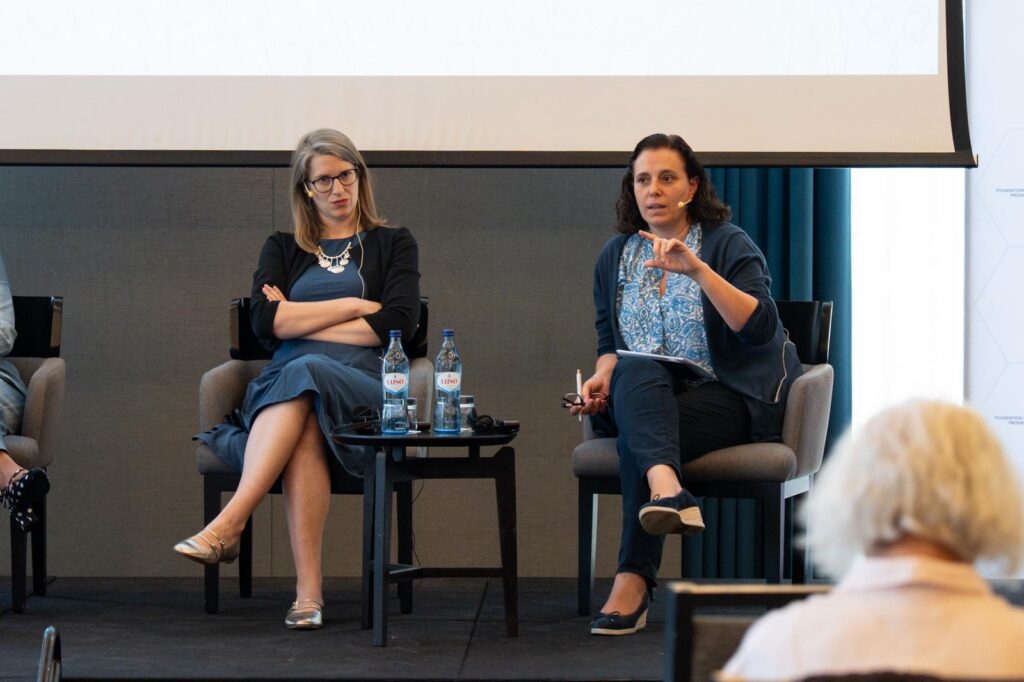
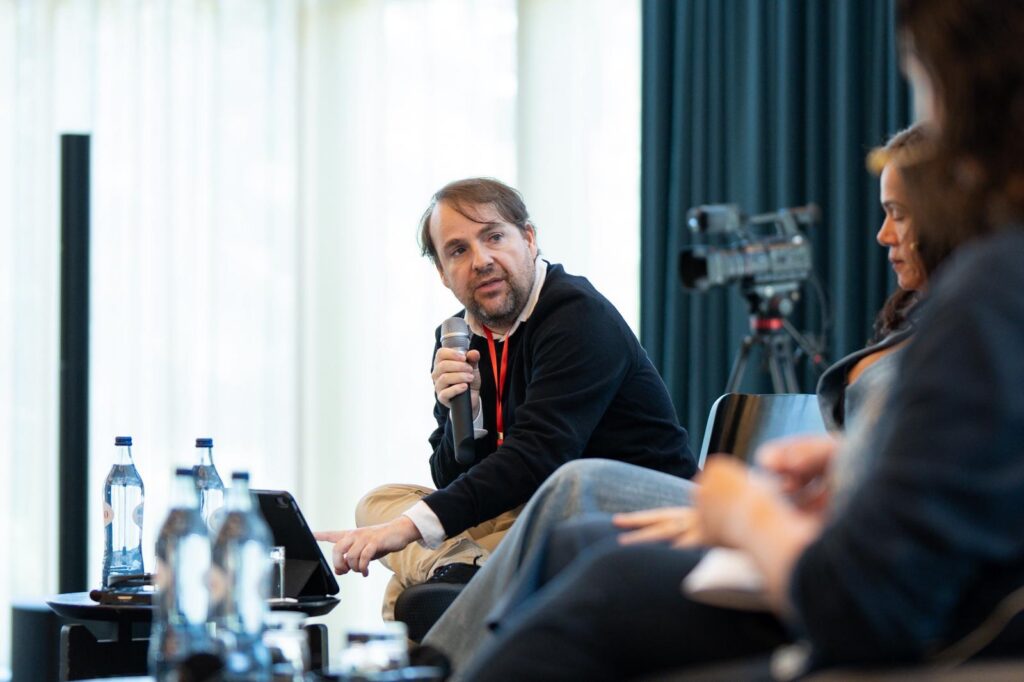
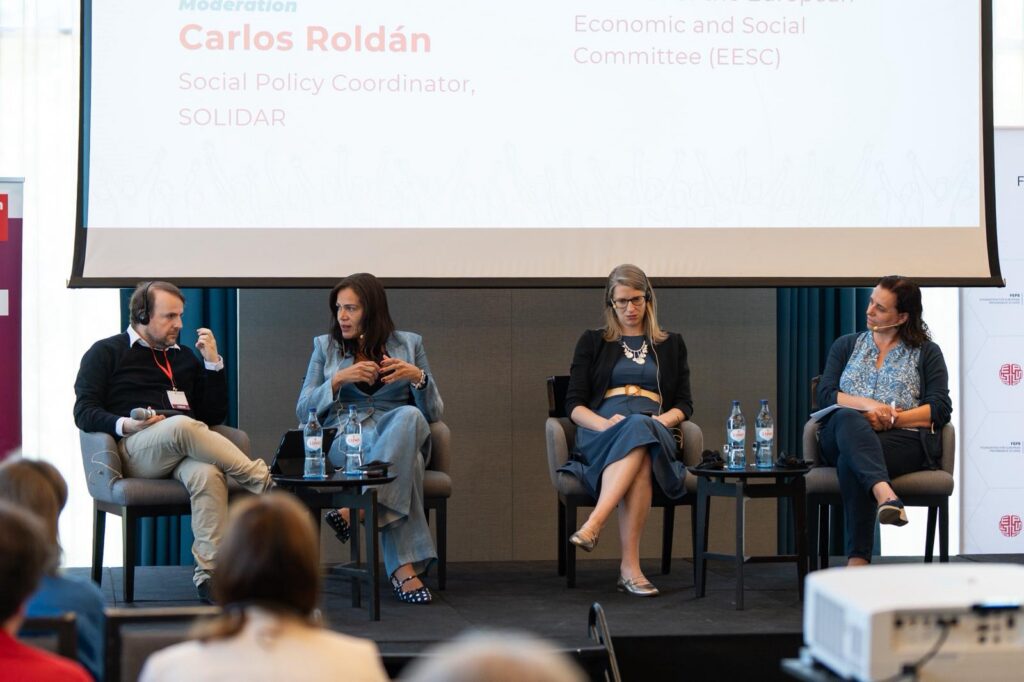
In this framework, SOLIDAR moderated a panel titled “Building an agenda with the people”, aimed at exploring ways to ensure that the EU social agenda is shaped bottom-up. The panel was opened by Marta Iglesias, Member of SOLIDAR’s Board and Director of Strategy and Advocacy at MPDL. Carlos Roldán Mejías, Social Policy Coordinator at SOLIDAR, moderated a conversation with Erica Acosta, Advocate at Casa do Brasil de Lisboa and Sophia Reisecker, Member of the EESC.
Marta Iglesias kick started the conversations reflecting on the efforts and responsibility that building an agenda with the people entails. This includes active listening and fundamentally changing the way in which policies are built, including by introducing structural civil dialogue. She also underlined the importance of policy coherence and offering policy solutions that span across several areas. Finally, she reminded the importance of collective action and the connection between social rights and the health of democracy.
Sophia Reisecker identified AI as a major challenge for social rights and stressed that no simple solution exists and that several actors at different levels should be mobilised. Workers need to have frameworks and answers about AI they can relate to. She then explained that based on the national missions that the EESC runs at national level, the EPSR is far from being a reality on the ground. She emphasised that policies without governance cannot work and therefore concluded by calling for more effective and democratic governance structures, as well as direct support to civil society organisations.
Erica Acosta analysed the shift in the EU migration system which is following the same trends dictated by the US. The New Pact on Migration goes in this direction, directly breaching the principles of Social Europe. She then highlighted that the work carried out by CSOs like Casa do Brasil should be seen as sources of evidence by policymakers to improve migration and inclusion polices. This kind of work should be valued and supported by adequate funding, but the current MFF proposal indicates that less funds will be dedicated to inclusion and more to a securitarian approach to migration.
A delegation of SOLIDAR members participated in the event, which included a closed-door exchange on 18 June. Their involvement happened in the framework of the activity Social Rights Ambassadors Workshop, financed by the EaSI grant BRIDGE 2026. The objective of the activity is to contribute to initiatives that foster the implementation of the EPSR while connecting national-level actors with EU-level ones, which is fully aligned with the nature of the event.
SOLIDAR contributions to this event have been executed in the framework of the project ” Bridging the Gap for a Sustainable and Social Europe – BRIDGE” with the financial support of the European Union, through the EaSI strand of the ESF+ programme.