
Social Rights Monitor
What is the Social Rights Monitor (SRM)?
The Social Rights Monitor is SOLIDAR interactive map that assesses the implementation of the European Pillar of Social Rights (EPSR) at national level from the perspective of civil society.
The EPSR – also known as the Social Pillar – is a set of 20 principles that guide the action of the European Union in the realm of social policy. In other words, it is intended to be a compass guiding the EU towards a more social Europe. For too many people in Europe, however, the social rights enshrined in the Social Pillar are not yet a reality.
Thanks to the contribution of our members and their partners on the ground (the National Strategy Groups), SOLIDAR monitors the extent to which social rights are respected, upheld and promoted for all people living in Europe.
The Social Rights Monitor also investigates the health of civic space and social and civil dialogue in the EU, as well as the extent to which a just transition is being pursued. Therefore, the thematic areas covered by the Monitor are the following: Equal opportunities and access to the labour market; Fair working conditions; Social inclusion and protection; a Just transition; and Civic space. The first three correspond to the three chapters of the EPSR, while the last two have been added to give a fuller picture of social justice in Europe.
Thanks to first-hand data gathered by national civil society organisations, the Social Rights Monitor constitutes a direct channel of policy recommendations between the national level and EU policymakers. It thus amplifies the voices and needs of the most marginalised groups. The Monitor dedicates a section to “advocacy points” which result from the national-level analyses in each thematic area and are addressed to EU policymakers.
Countries are assigned a score for each thematic area. This makes immediately visible how each country is performing in each area and enables comparison with other countries and over time. The numerical scores originate from the National Strategy Groups’ (NSGs) assessments of national developments related to social rights, civic space and just transition in the previous year. Negative developments in an area result in lower scores.
How do we use it?
SOLIDAR’s main role as a European-level civil society network is as a bridge between EU institutions and their policies on the one hand and our progressive members working at the national level on the other. The Social Rights Monitor is a valuable tool to gather information from the ground and bring it to policymakers’ attention. This ensures that the voices of the most neglected social groups are duly taken into account. For example, the SRM complements the European Semester, by providing a more-complete assessment of Member States’ policies. Regrettably, the Semester is still too focused on countries’ economic and financial performances and does not provide sufficient guidance on upward social convergence in the European Union.
SOLIDAR disseminates the findings of the Social Rights Monitor in various ways, including through the Social Europe Conference, an annual event at which it is presented, and which also explores a topic of priority for social Europe. More generally, the Monitor is one of the main ways through which the SOLIDAR network presents its positions on social affairs, so its findings are mainstreamed throughout our advocacy work.
Latest news
Social Rights Monitor
TYPe of post:
Year publication
Tags
December 17, 2021 SOLIDAR’s Social Rights Monitor 2021 offers an analysis of the state of social rights in 16…
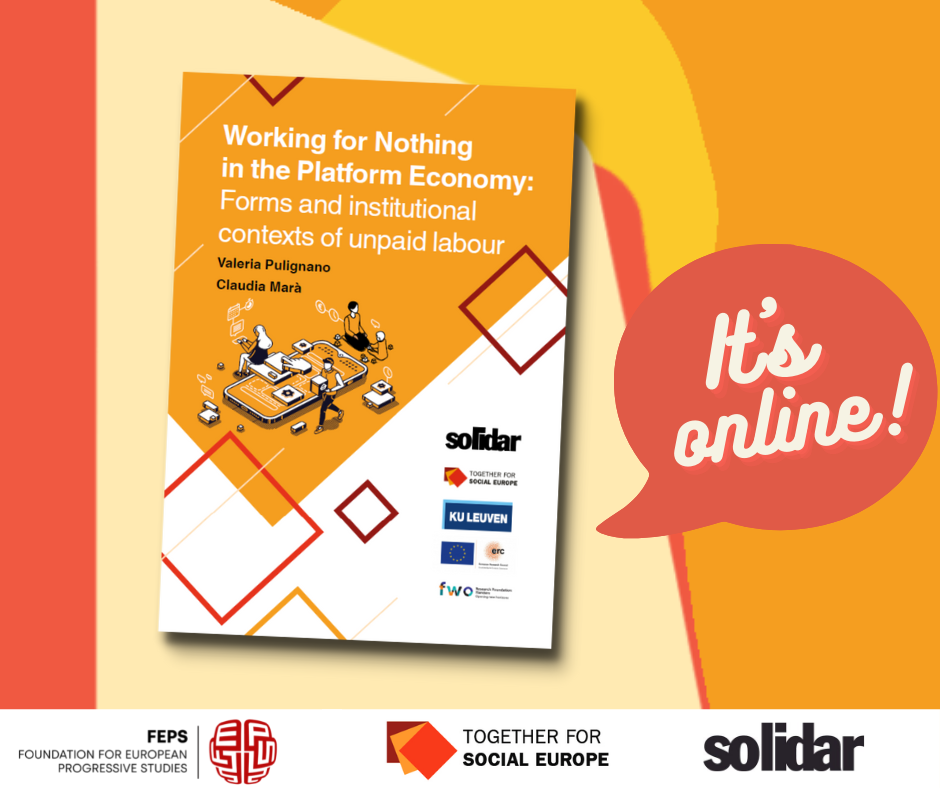
December 9, 2021 The advent of digital labour platforms – and its acceleration during the pandemic -require researchers, civil society…
November 25, 2021 The COVID-19 crisis has exacerbated pre-existing inequalities, including gender inequalities. Indeed, the socio-economic consequences of the…
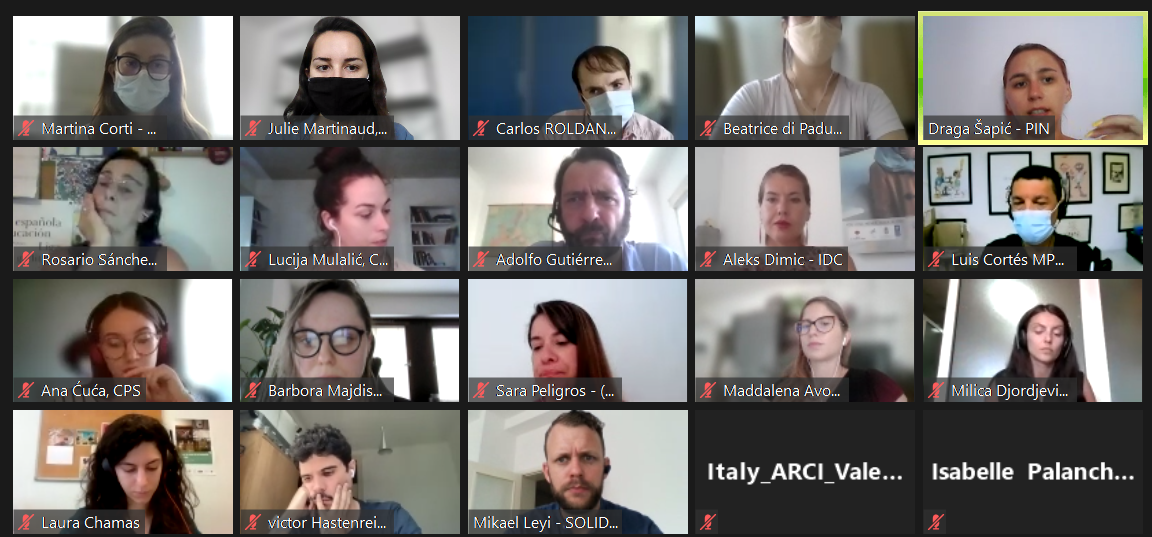
The first Study Visit of the Social Affairs Forum for 2021 took place virtually on 6-7 July 2021. The…
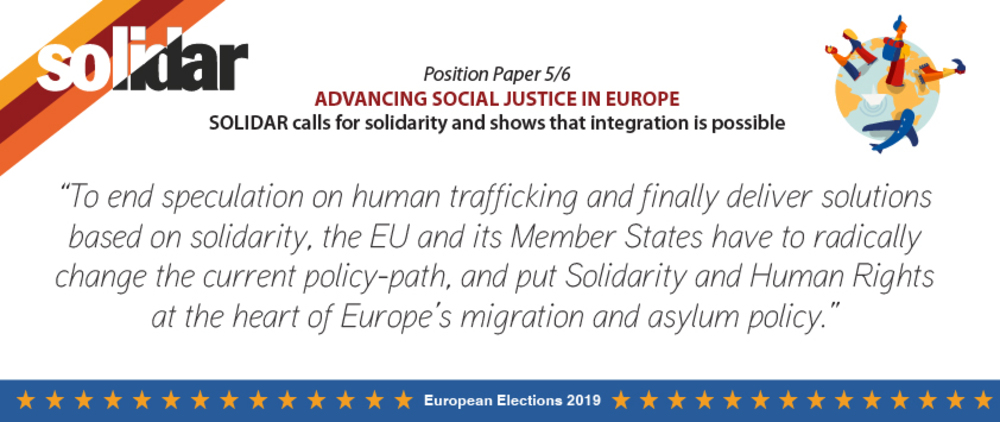
Let’s talk real and clear the field of false problems Citizens’ trust in Civil Society Organisations remains high because…
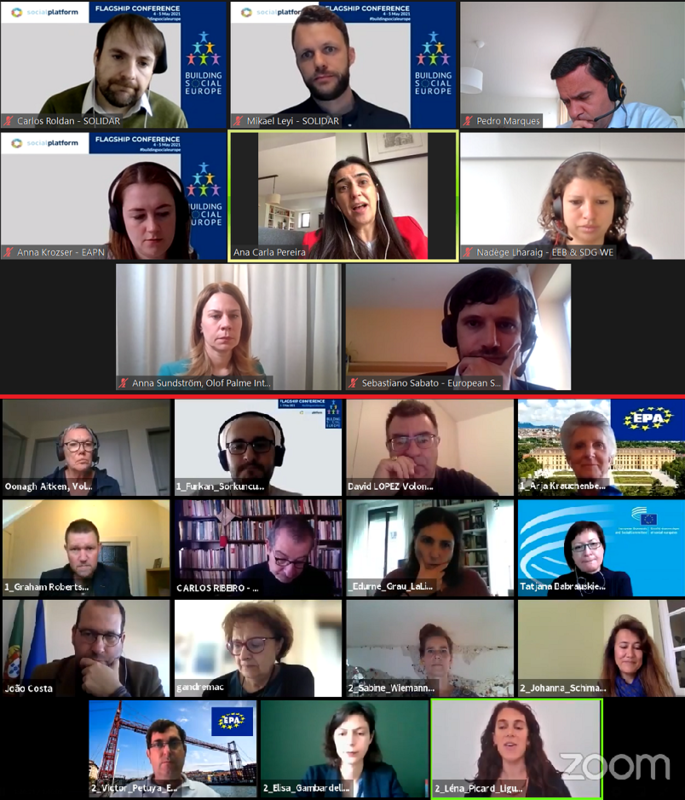
May 17, 2021 Four years after the Gothenburg Social Summit for Fair Jobs and Growth, during which the European Pillar of Social Rights (EPSR) was proclaimed, EU Heads of…
The Porto Social Summit is yet another step to a Social Europe This weekend, apart from the 71st celebration…
This project is closed and ran between 2020 and 2023. WHAT IS THE PROJECT ABOUT? Sustainable Practices of Integration…

On 4 March 2021, four years after the proclamation of the European Pillar of Social Rights in Gothenburg, the European Commission presented its…