

SOLIDAR stands with protesters across Europe
In recent weeks, we have seen waves of protests across Europe in response to a range of issues such as the rising cost of living, a lack of political accountability and cuts to public services. In several cases we have seen disproportionate crackdowns on protests by authorities, police forces calling the health of our democracies into question. SOLIDAR’s members have been among those organisations witnessing first-hand the protests and the responses they have been met with.
Corruption and lack of political accountability
In both Serbia and Albania, corruption and a lack of political accountability were among the main issues decried by protestors.
Our Serbian member, the Initiative for Development and Cooperation (IDC), outlined, “Protesters called for genuine accountability, the eradication of systemic corruption, and the restoration of the rule of law.” Ultimately, the student-led protests led to the electoral defeat of “the government that had consistently undermined democratic principles and presided over increasingly authoritarian governance.”
Our Albanian member, the Centre for Labour Rights (CLR), explained that people were protesting against “corruption, inequality and a lack of institutional accountability,” adding that “what began as opposition to controversial tourism developments in environmentally sensitive areas has expanded into a broader movement.”
Cost of living and cuts to public spending
CLR also cited “rising living and education costs” as catalysts for the protests.
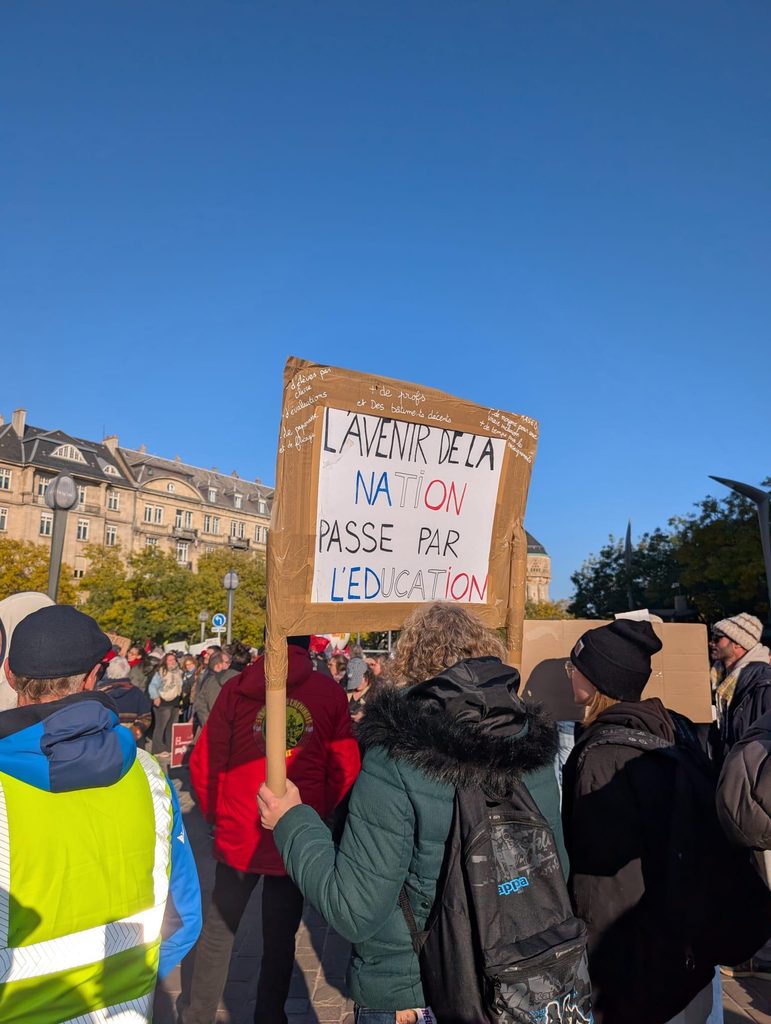
This is the case in France as well; our member La Ligue de l’Enseignement outlined that “young people, trade unions and civil society organisations are mobilising against growing social and educational inequalities, deteriorating public services and budget cuts.” In parallel, there were young people “denouncing worsening learning conditions, overcrowded classrooms, teacher shortages, inequalities in access to education and uncertainty about their future,” while “trade unions and civil society organisations are mobilising against planned budget cuts for 2027.”
Similarly, our Greek member, DAFNI KEK, expressed concerns about cuts to public education funding, as protestors called for “better school infrastructure, filling teacher vacancies and smaller classes.” Greek protests also called for measures to address the rising cost of living and housing affordability.
Fundamental freedoms and protest as democratic engagement
Our members in Serbia, Albania, France and Greece all emphasised the reaction of authorities and law enforcement to the protests, echoing one crucial message: the right to peaceful protest must be protected and upheld.
IDC Serbia called and Serbian authorities and EU institutions to “facilitate a peaceful democratic transition, safeguard fundamental freedoms and civic space, and ensure accountability for those responsible for human rights violations.”
Similarly, CLR in Albania stressed that authorities must “facilitate peaceful assembly, ensure that policing is necessary and proportionate, independently investigate violence and alleged abuses, and review measures that risk penalising peaceful participants or discouraging civic and trade union engagement.” Additionally, EU institutions should “engage directly with civil society and trade unions, and make effective protection of fundamental rights and meaningful dialogue a clear priority within Albania’s accession process.” In France, La Ligue emphasised that “the right to protest is inseparable from a broader democratic ambition: enabling everyone, particularly young people, to express themselves, participate in collective decisions and exercise their power to act.”
Finally, in Greece, DAFNI KEK also stressed the importance of peaceful protest for democracy: “Democracy cannot be measured only by the existence of elections, laws or formal opportunities for participation. It must also be measured by the extent to which an ordinary citizen feels protected, heard, respected and able to influence the institutions that shape everyday life.”
Across Europe, we cannot afford to allow fundamental freedoms like the right to peaceful assembly to be undermined. When protests are met with repression and disproportionate responses by law enforcement go unchecked, a dangerous precedent is set – one which undermines everyone’s democratic engagement.